Work shirts
- Short- and long-sleeve button-front, or snap-front with a concealed placket
- 65/35 poly-cotton twill or poplin, 150–180 gsm
- Work polos in performance piqué, 160–200 gsm, for advisors and the parts counter

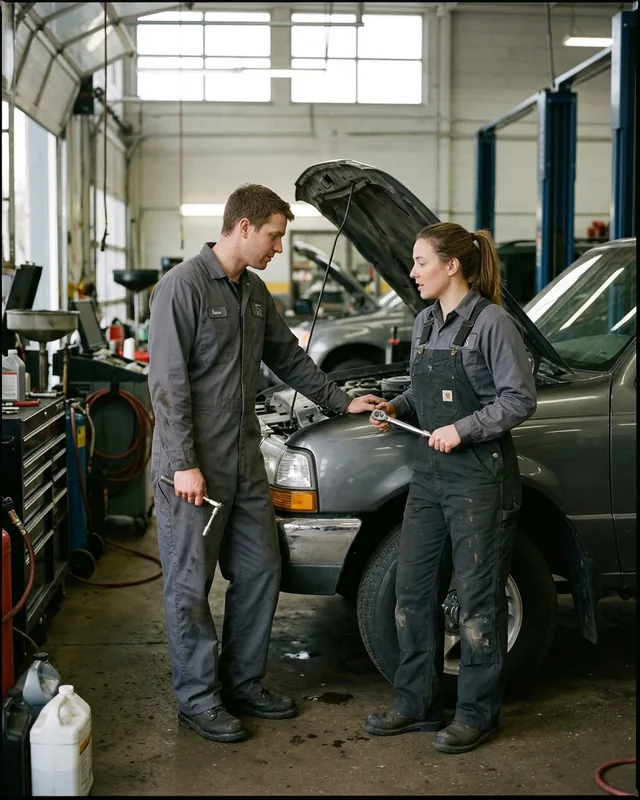
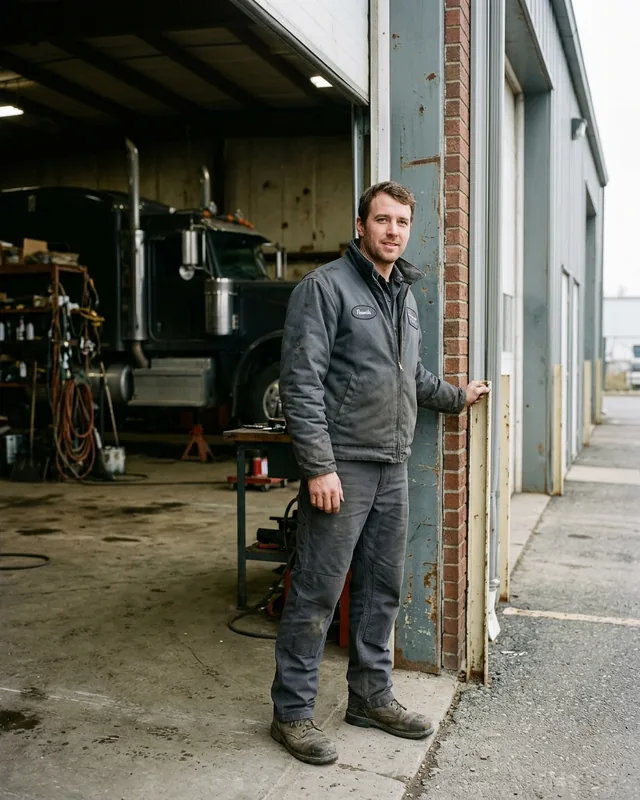
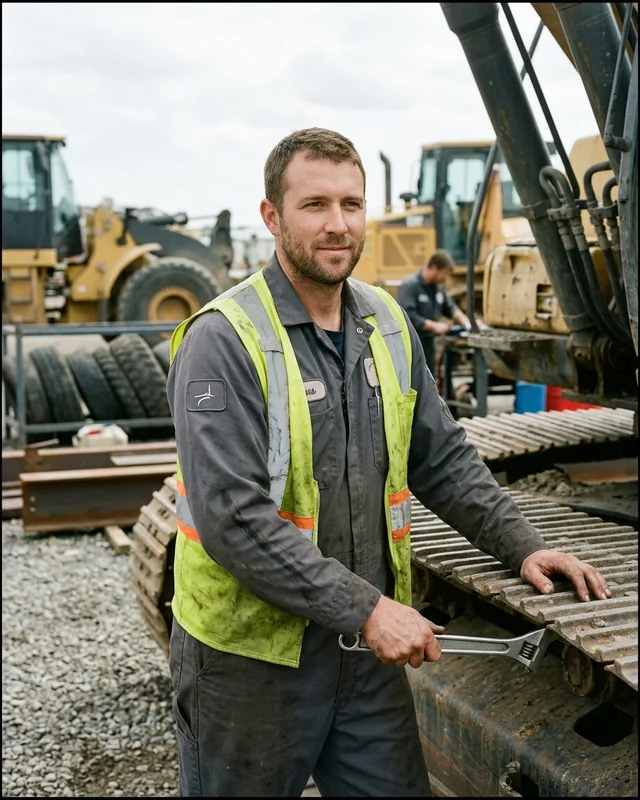
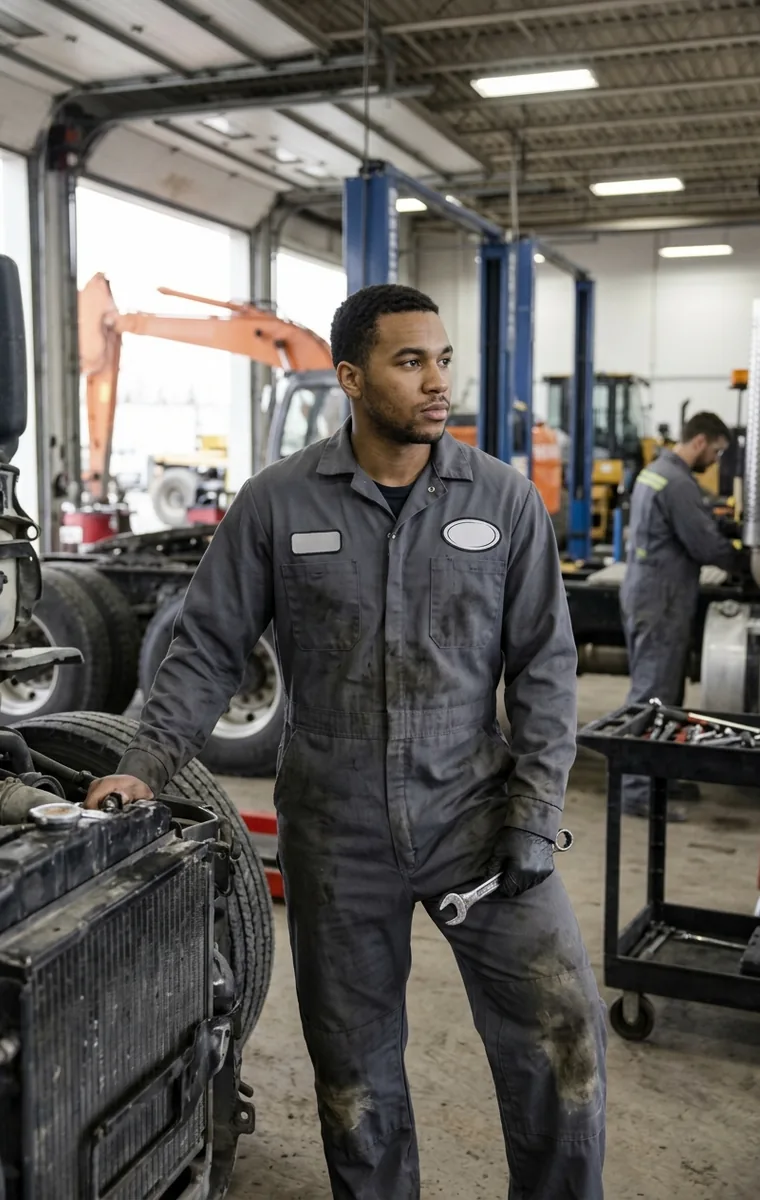 Chest
Forearms & cuffs
Pocket mouths
Front fastening
Knees
Back & seat
Chest
Forearms & cuffs
Pocket mouths
Front fastening
Knees
Back & seat
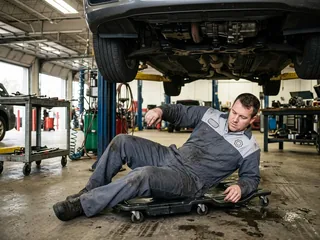
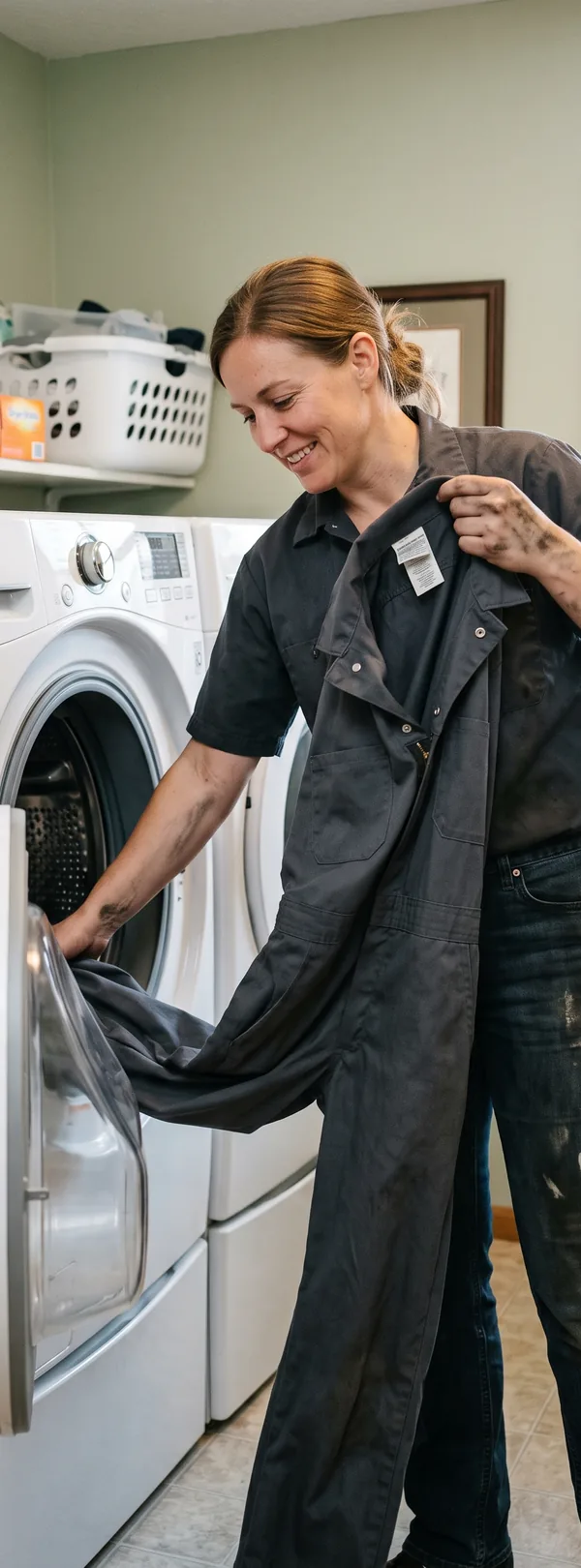
A laundry service collects the uniforms and washes them hot with alkaline detergents.
The shop or depot runs its own commercial machines.
Technicians wash their uniforms in a domestic machine at home.
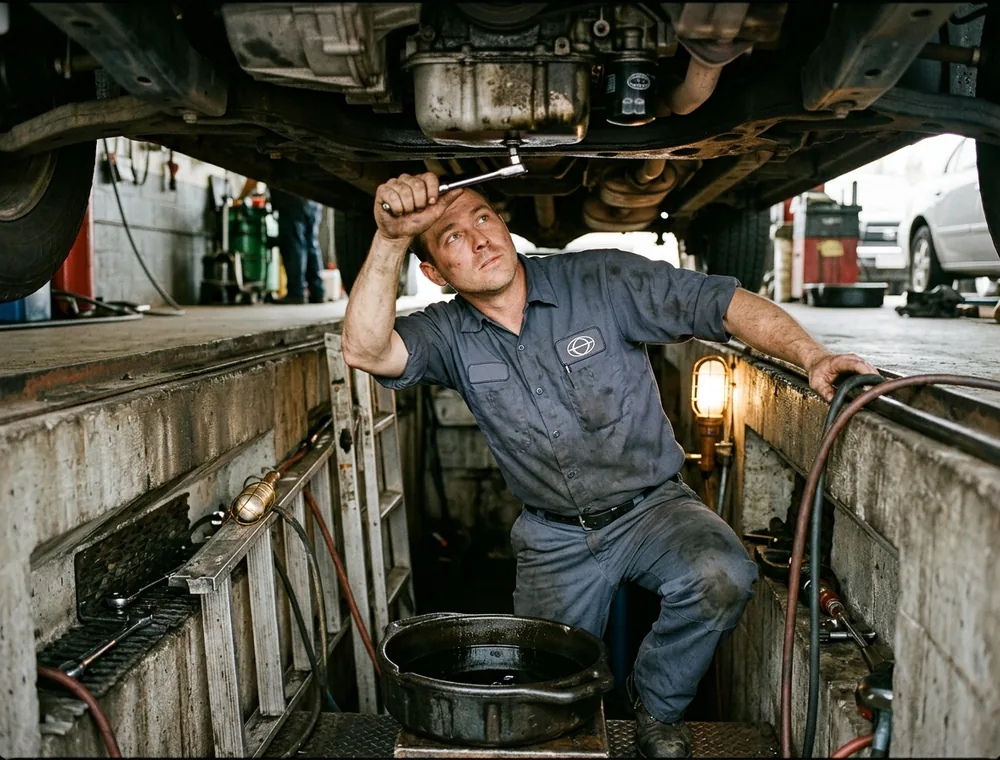
One brand look across every shop, worn by a workforce that turns over steadily.
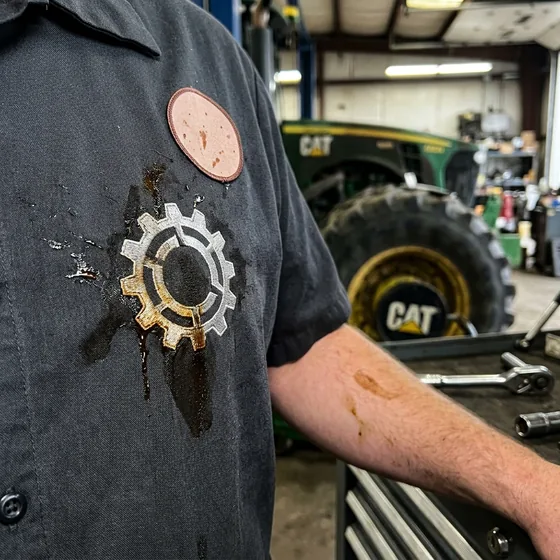
Engine oil from drain plugs and filters, grease, brake fluid, solvent on the cuffs; mostly chest, forearms and knees.
 Example names
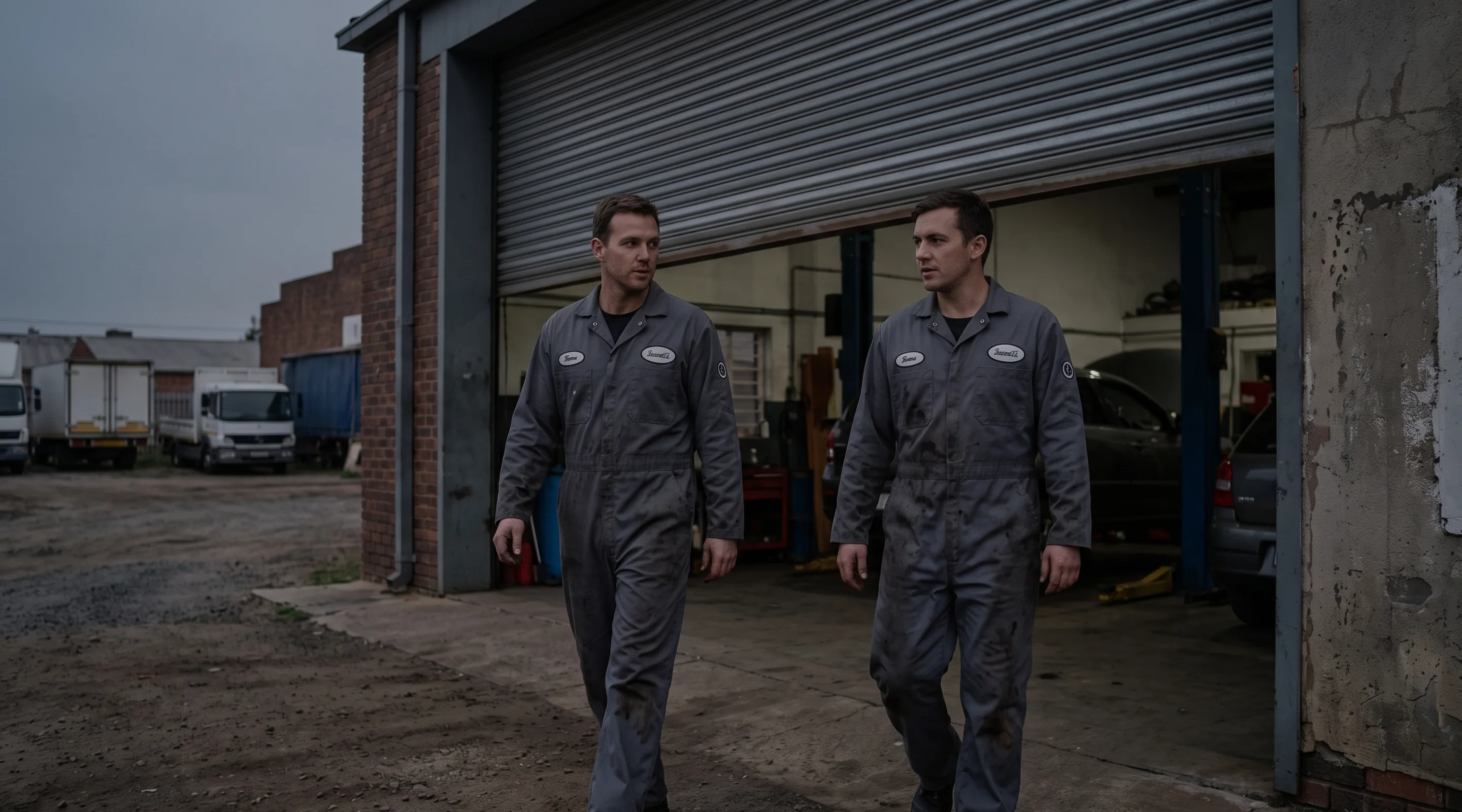
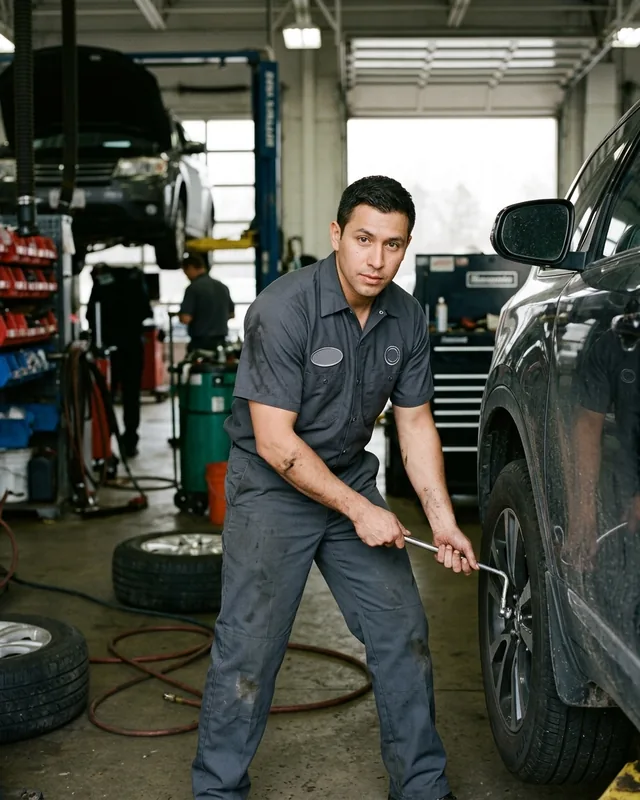
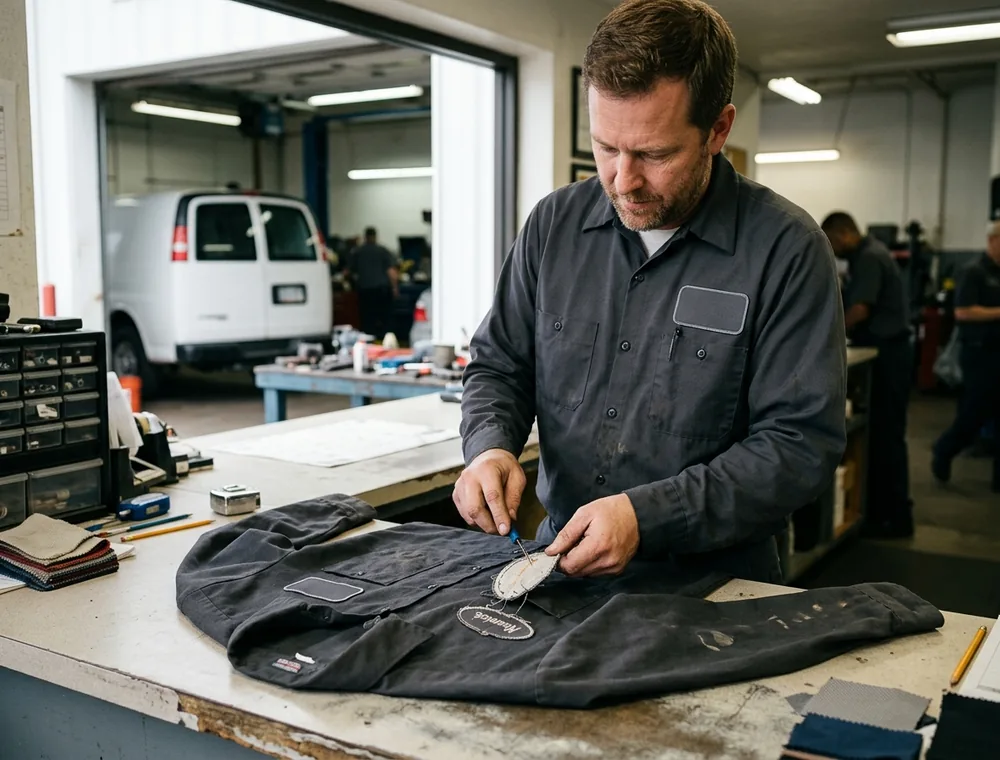
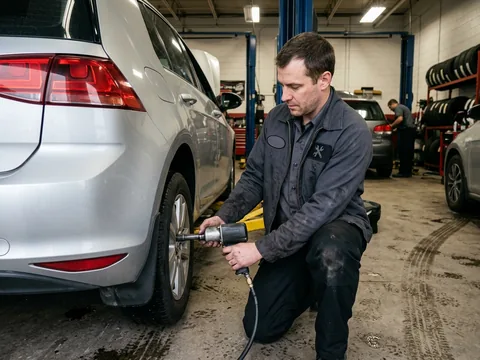
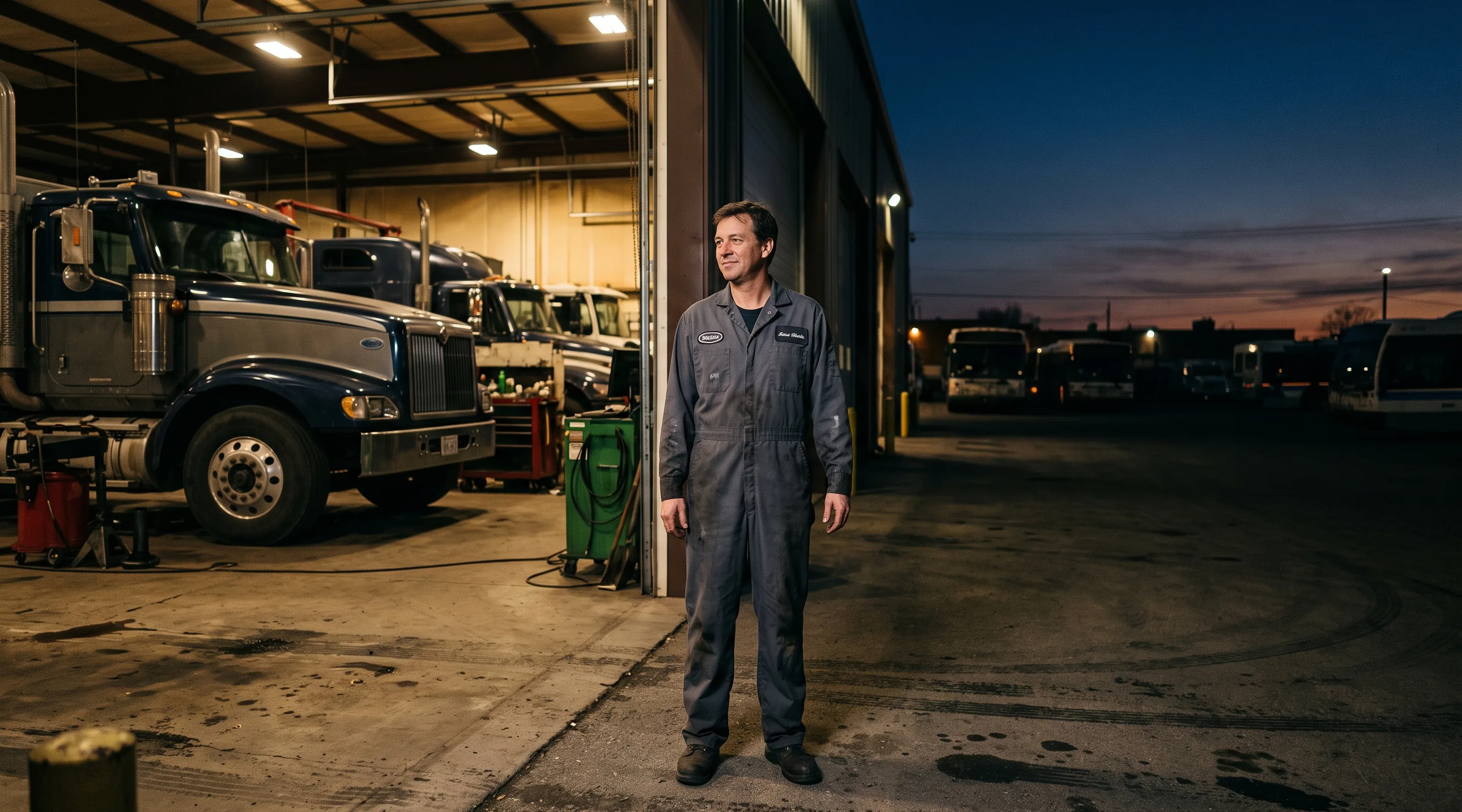
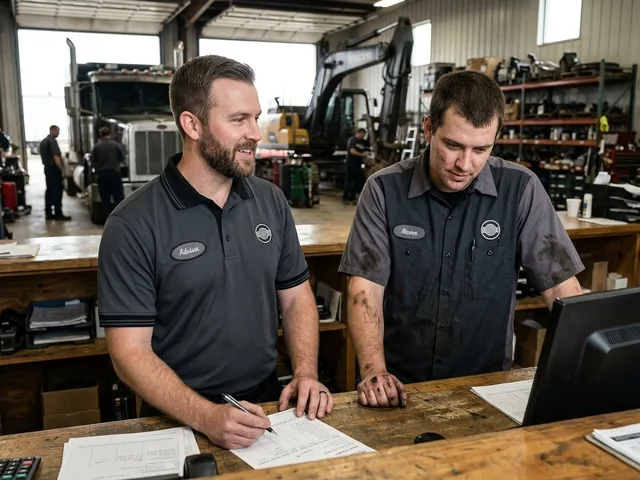
Shirts with flat-front or cargo pants, short-sleeve coveralls in oil-change bays, polos for advisors. Logo embroidered in polyester thread, the name on a sewn oval patch. A laundry service collects every garment.
When a technician leaves, the shirts go back into stock with a new name patch; garment and logo stay. So the logo must outlast the full industrial wash life, and the finish must keep releasing oil.
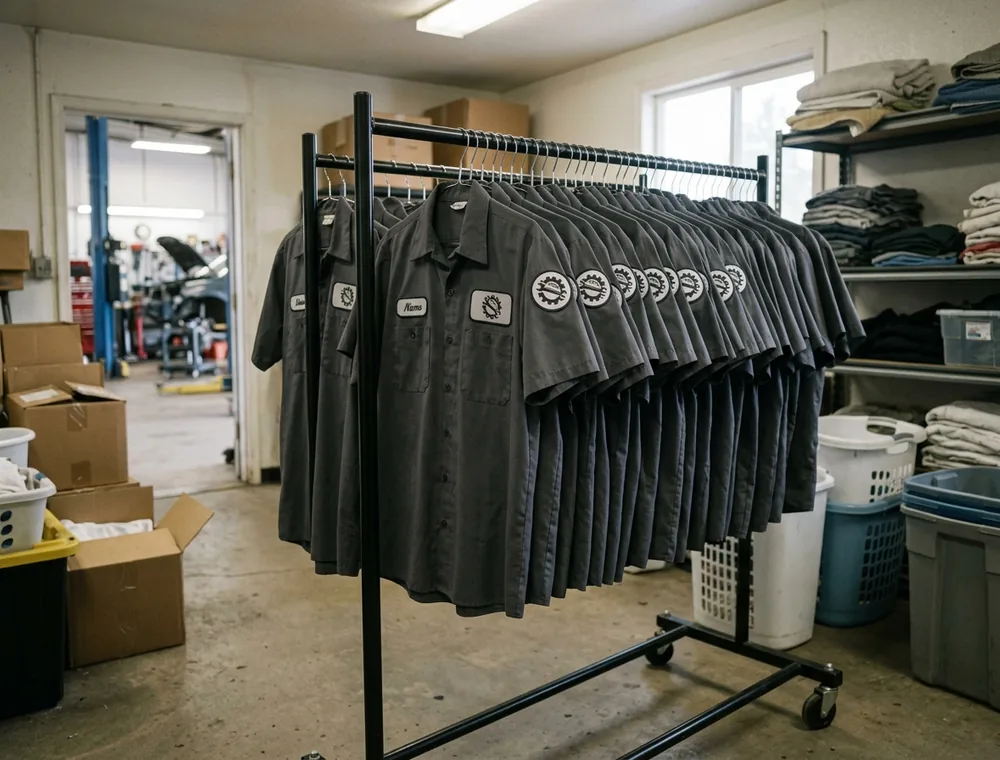
New starters go on the re-order run, packed per person and labelled by shop; spare name patches can be ordered alone.
Each shop's rack holds clean shirts with the logo intact, the laundry bag is filling, and a re-issued shirt waits with its new name.
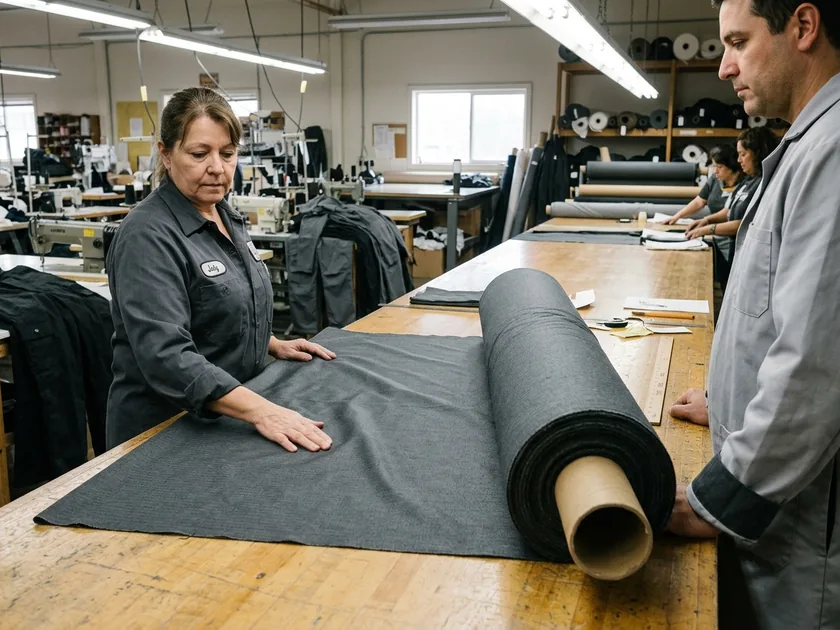
65/35 poly-cotton: the polyester holds shape and colour through hot alkaline laundry washes, the cotton keeps a warm bay bearable. Shrinkage within 3% to ISO 5077.
Navy, charcoal, black or dark grey, so the trace a wash leaves does not show. A light brand colour becomes two-tone, darker where oil lands.
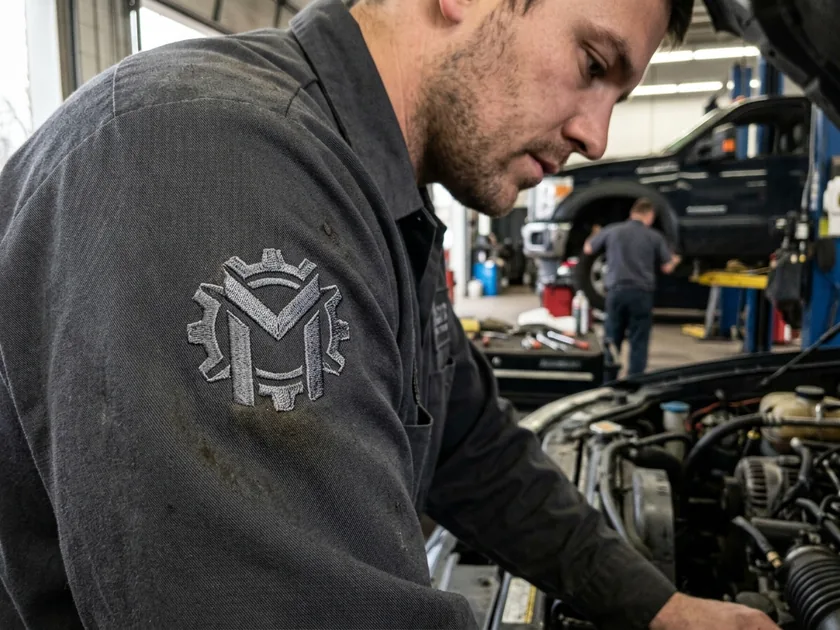
Polyester thread on cut-away backing by default: no film or ink for brake fluid or solvent to soften. No screen print on chest or cuffs; transfers on industrial-launderable film only. Decoration methods
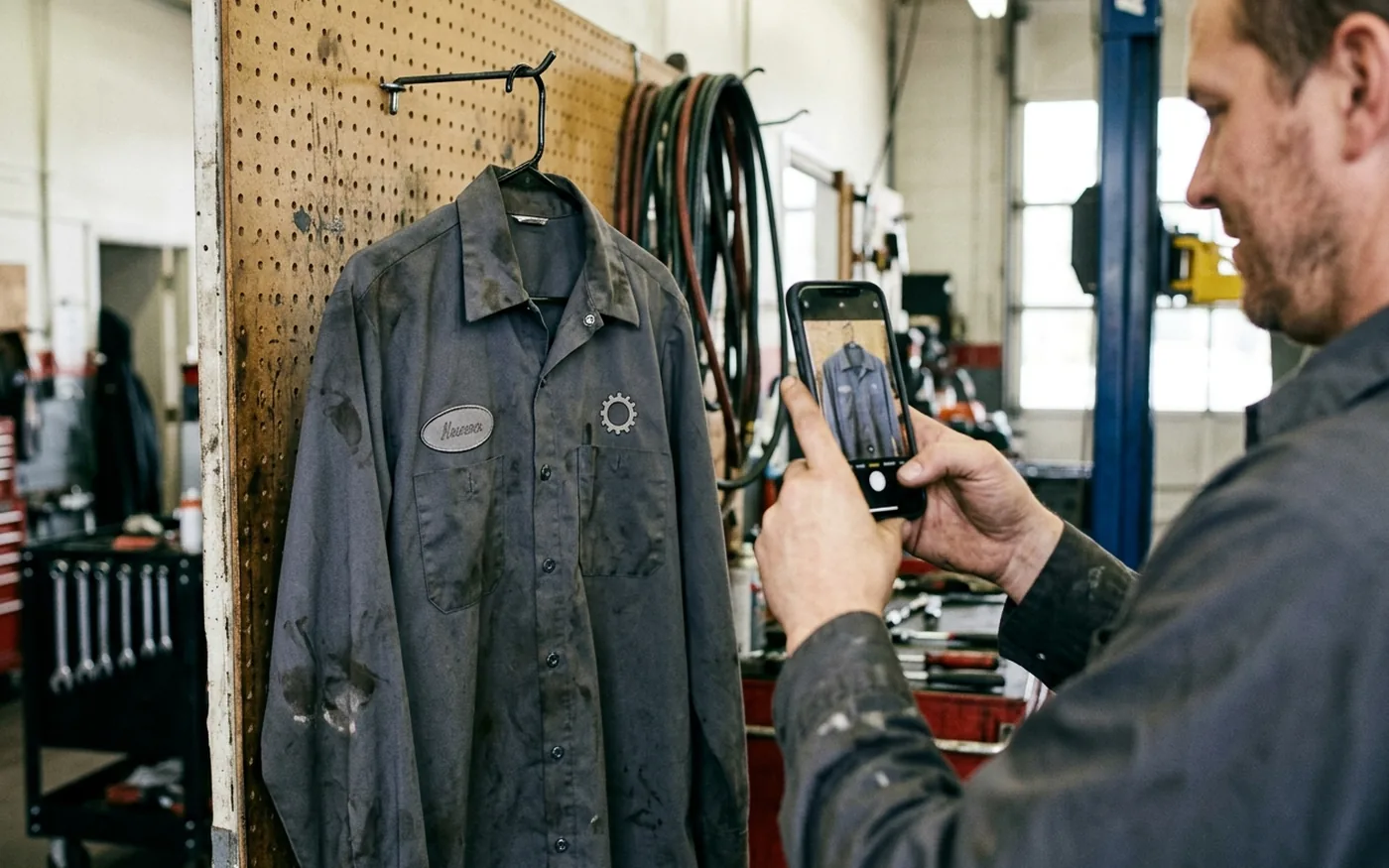
The colour lab technician grades the fabric; line QC runs the drip test and records it with the logo set-up; the QC manager reviews both before your sample ships. Laundry-service programs repeat ISO 15797 × 50 on pre-production pieces, inside the bulk window.
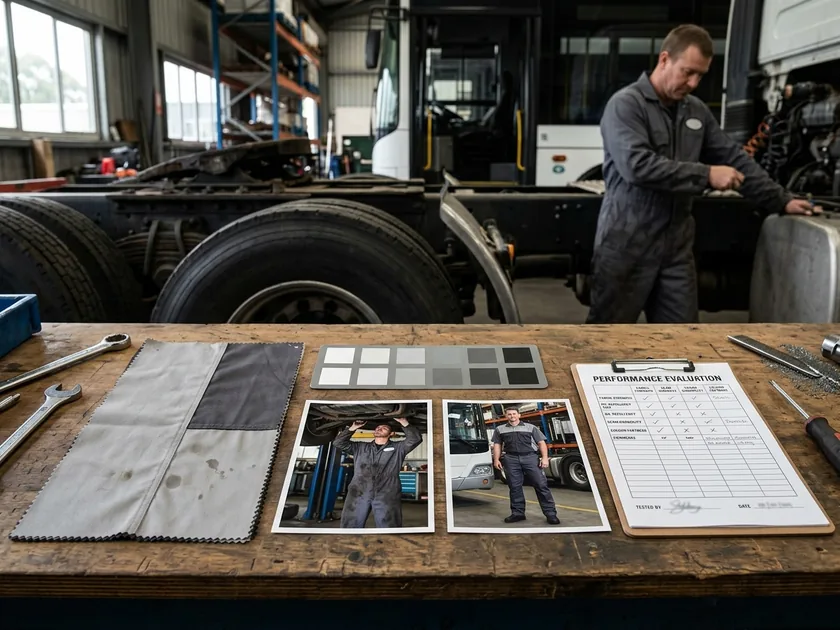
TM130 grade per fabric, drip-test before and after photos per logo, the wash-test record (ISO 15797 or ISO 6330 × 50, ISO 105-C06 grade 4) and the logo method per garment, kept for re-orders.
A fabric that misses the grade is not cut: it is re-finished or replaced. A failing logo is tuned and re-tested, then moved to another method; you hear first.
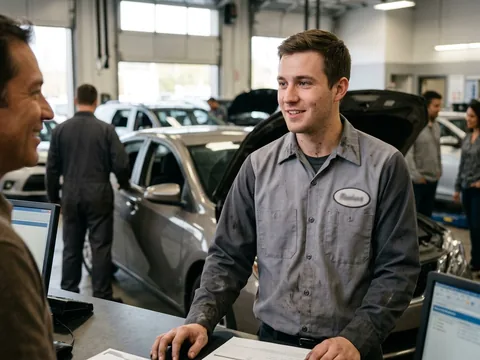
Technicians walk the vehicle back through the handover area. The workshop uniform is seen by the customer.
Lighter oil than a quick-lube bay: service grease, brake fluid, ATF that leaves a red or amber mark, brake dust on the knees.
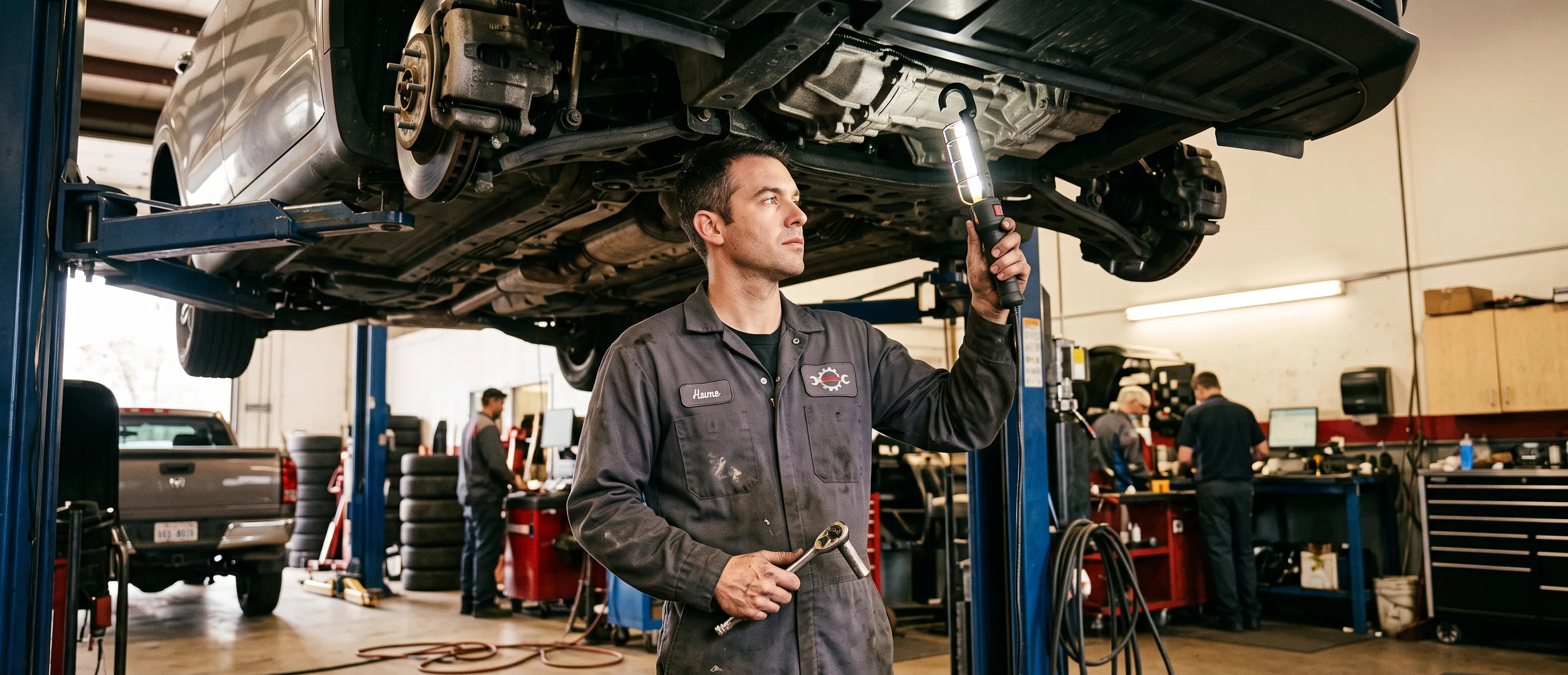
Concealed-snap shirts and covered-rivet pants, because technicians lean on customers' doors all day. Advisors wear same-colour polos with the dealership logo.
A mark that passes in a repair bay fails at the handover desk, so shirts leave service early. Soil-release and a dark or two-tone build decide how long a shirt stays presentable; the concealed front decides whether it scratches paint.
Replacement shirts ordered per technician, stitched from the recorded logo settings and dyed to the same retained lab dip.
Every technician has a clean spare on the hook, the handover area has seen no oil marks, and retired shirts are counted for the next re-order.

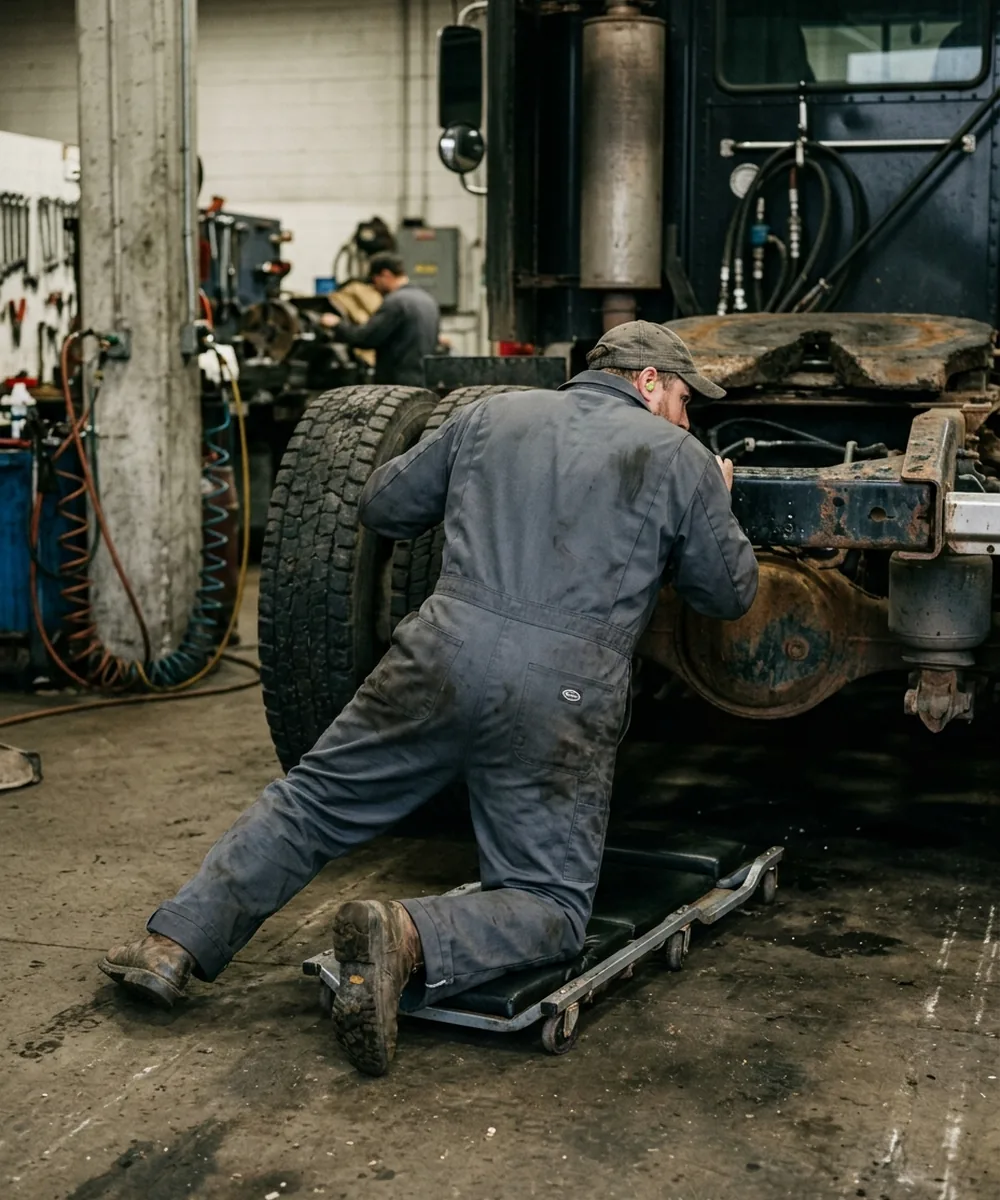
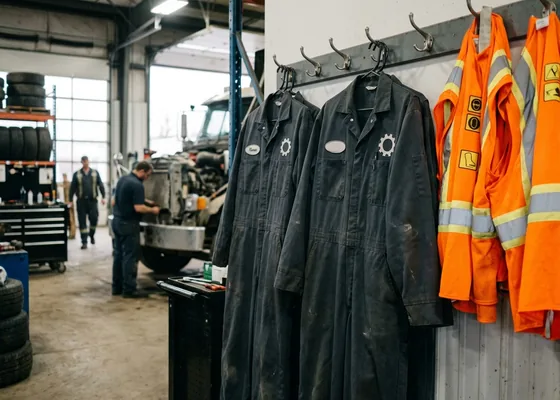
Large vehicles, a lot of underbody work, and a yard where vehicles move.
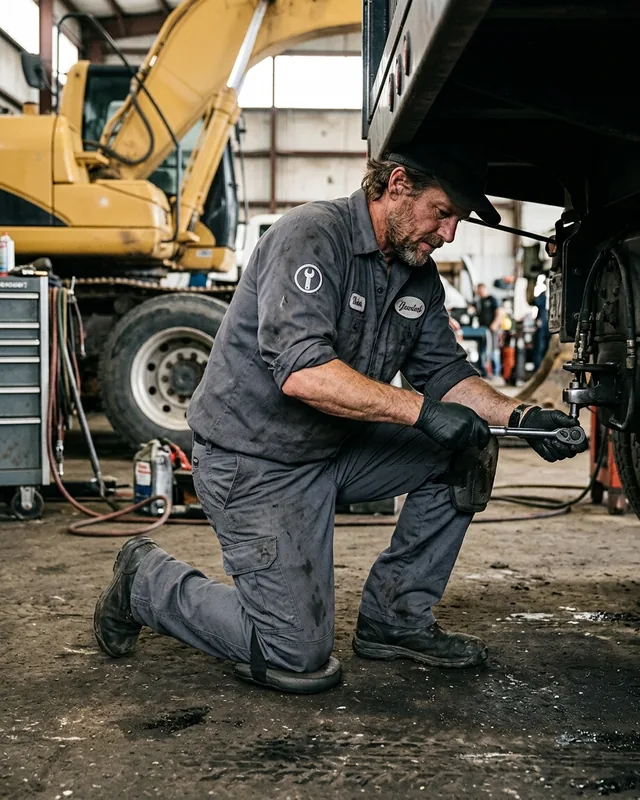
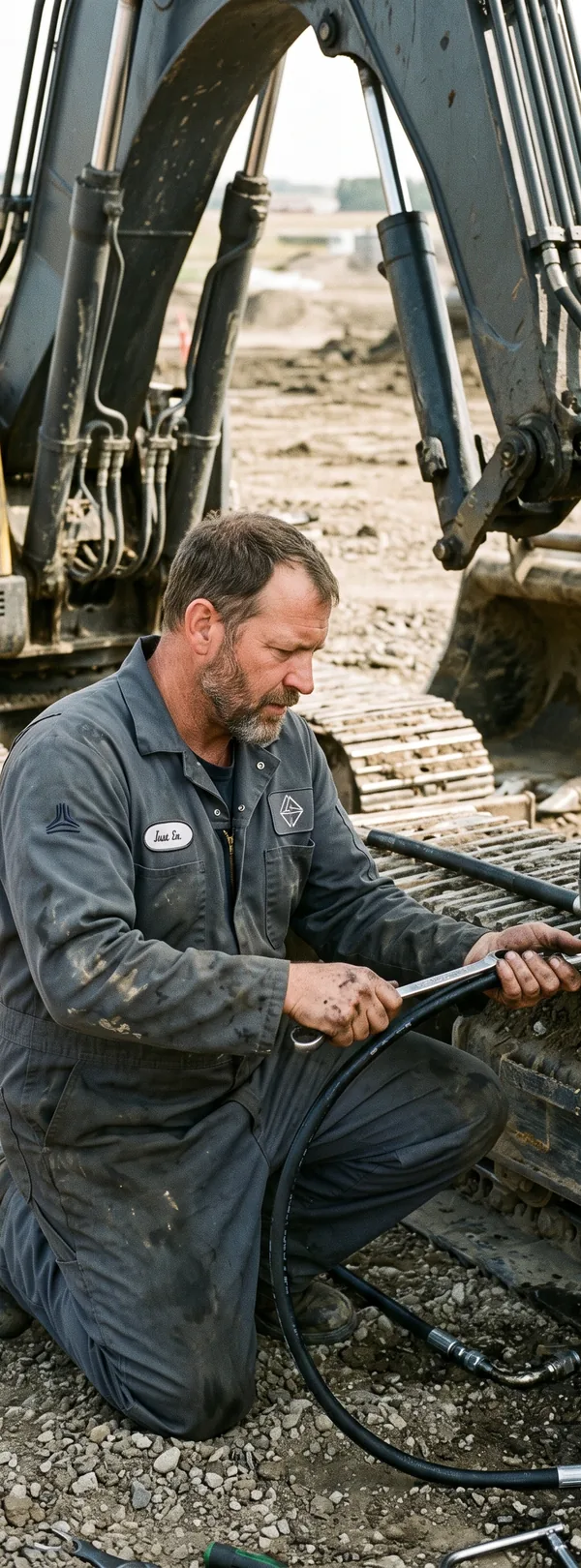
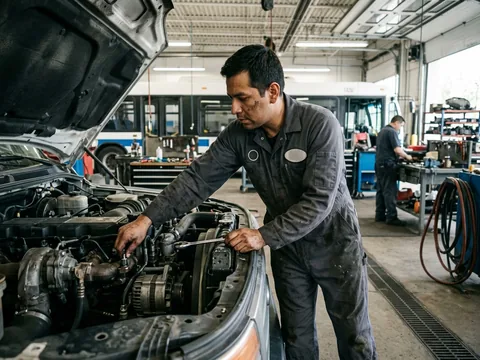
Diesel, engine and gear oil, chassis grease, hydraulic oil from tail lifts and tippers, road dirt. The creeper greases the back and seat; the floor takes the knees.
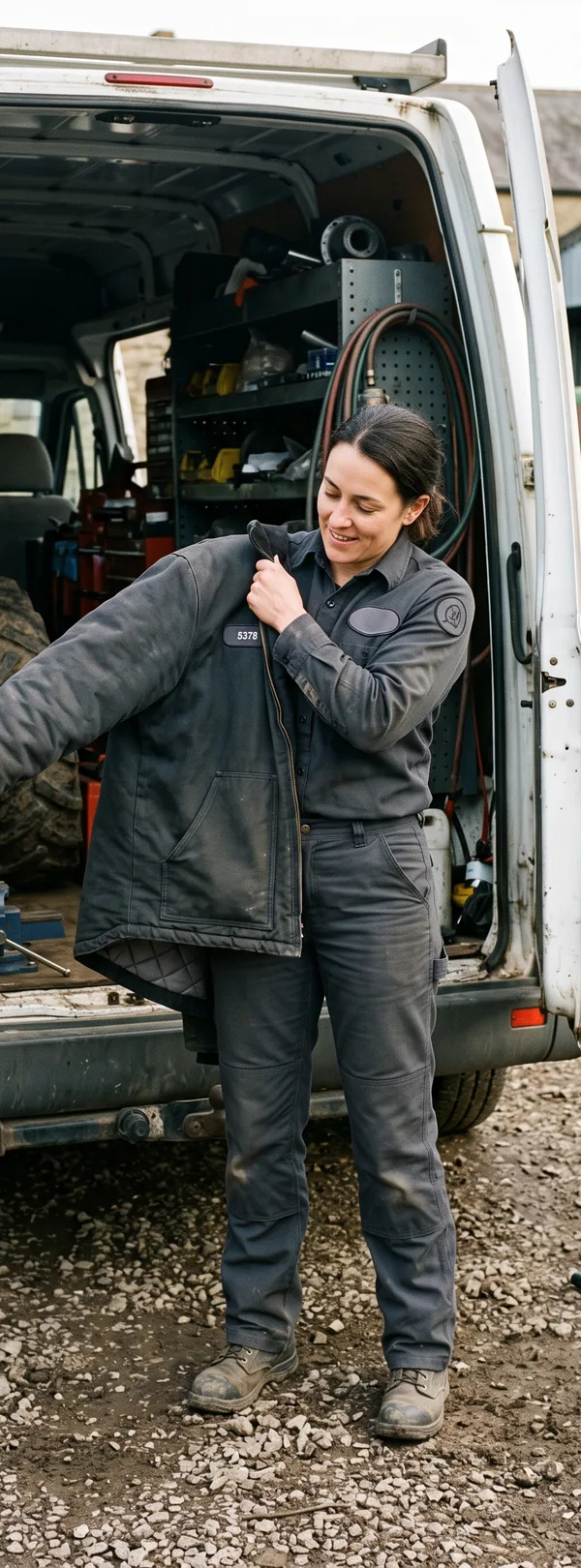
A coverall zipped over own clothes, or cargo pants and a work shirt; insulated jackets for cold bays; a Class 2 vest or Class E pants in the yard (safety vests). Own washers.
Creeper work and kneeling wear knees, seat and back faster than oil marks them. Reinforcement, the action back and triple-needle seams decide how long a coverall lasts; charcoal or navy hides the diesel the washer leaves.
Re-orders by depot, packed per technician, cartons labelled with the depot. A technician who moves keeps the same name patch and sizes; only the carton label changes.
Coveralls back on the depot hooks after the wash, knees intact, yard vests hanging beside them.
A second twill panel over the knee, open as a knee-pad pocket, placed per size on the graded pattern. The pad comes from your PPE supplier.
Triple-needle inseam, outseam, seat and crotch. Bartacks at pocket mouths, belt loops, the crotch join and the fly end.
Action back for reaching into an engine bay, elastic back waist, two-way zipper, snap or hook-and-loop cuffs. Elbow panels on long sleeves on request.
Chest pockets with a pen slot; rule, cargo and phone pockets; every mouth bartacked. Logos stay clear of flaps, stitched before assembly near a pocket.
Concealed snap plackets on shirts, concealed zippers on coveralls and jackets, covered rivets, no exposed metal on the front body or belt area, and name patches sewn flat with no pins.
Each fabric is dipped to your one Pantone and lands within ΔE2000 2.0 of it. The set is approved together under D65 daylight and re-read under warm illuminant A. Each fabric keeps its own retained dip; re-orders match it at ΔE 1.0 or less. Colour continuity
Digitized once, set up per garment type and kept on file, so next year's coverall carries this year's logo. Full method: custom work shirts.
Each role with its garments, style codes, dip ID per fabric, logo record, name yes or no, and sizes. Any change opens a new version you re-sign.
The same font, size and thread colour on shirt, coverall and jacket, from one signed spelling proof.
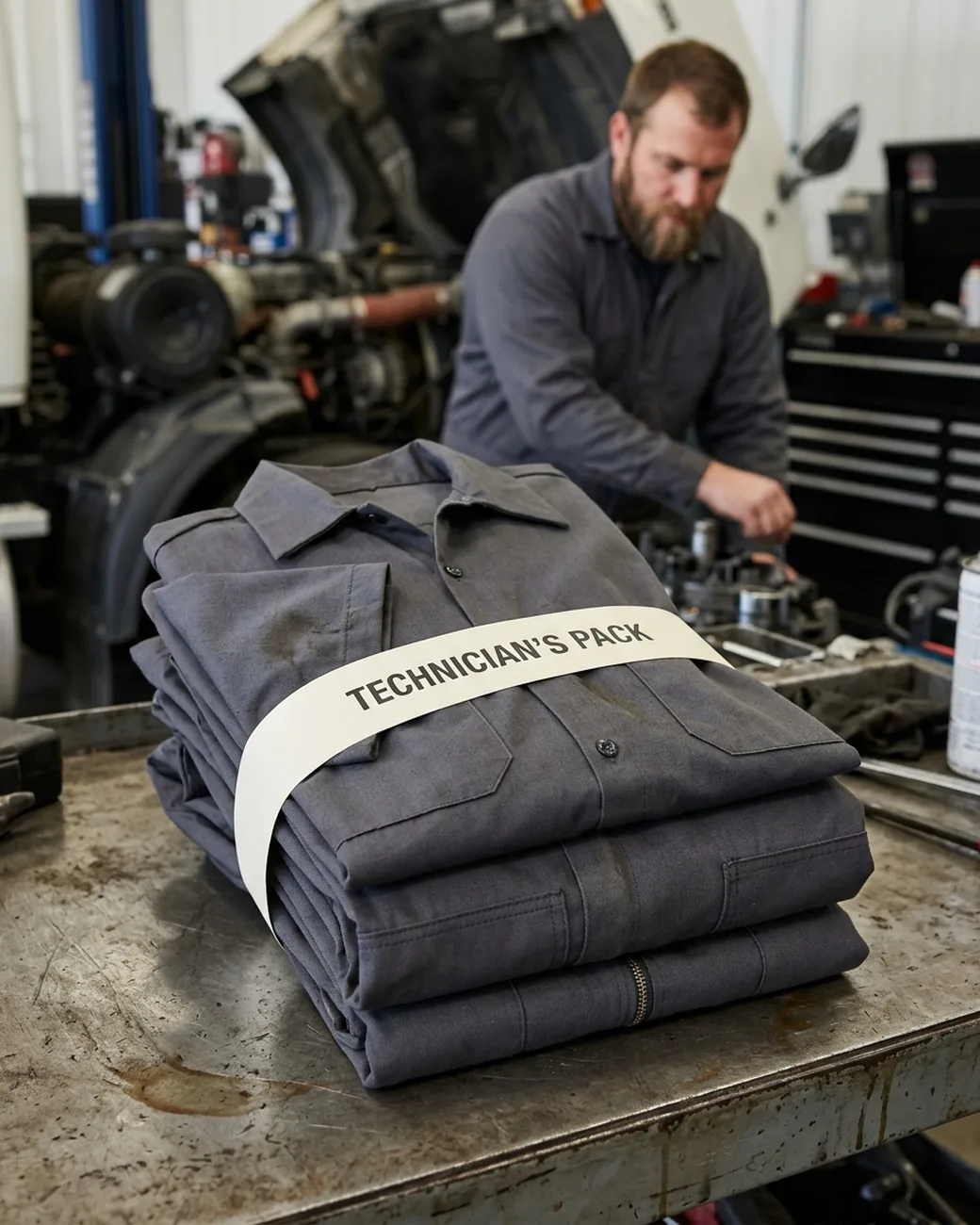
Shirts, pants, coverall and jacket packed together, labelled with name, size and shop or depot, so each site unpacks straight onto its hooks.
Where to go once you know which workshop you are.
How each logo method is chosen and set up, and how names go from staff list to garment.
Read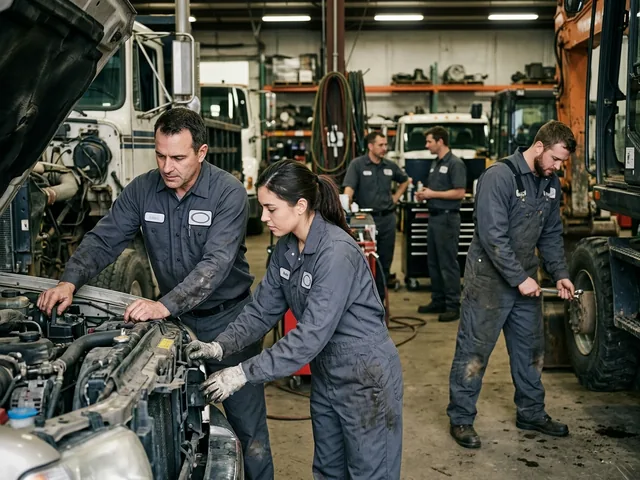
Outfitting dozens of shops or depots: sizes, trial sets, waves, new hires.
Read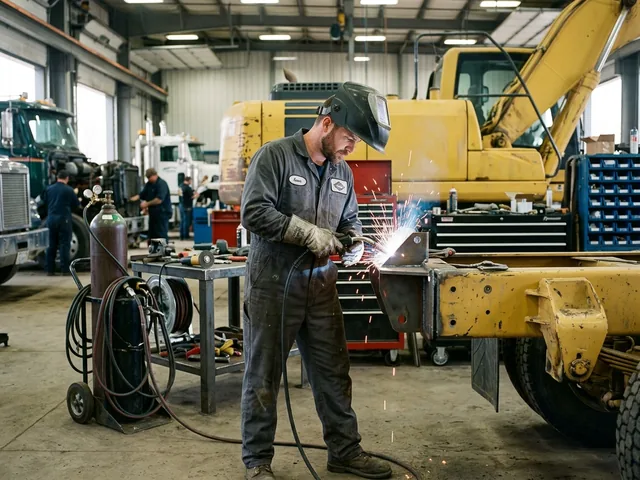
FR shirts, pants and coveralls for welding, cutting and high-voltage work.
Read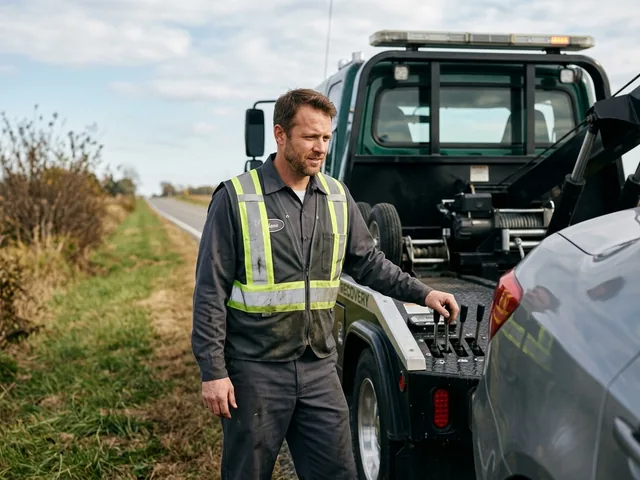
Class 2 vests for depot yards and roadside recovery, sized over a coverall.
Read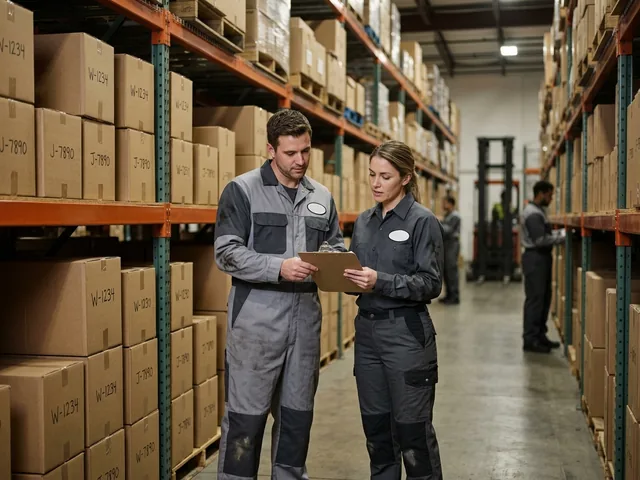
Mechanic uniforms under a distributor's or brand's own labels.
Read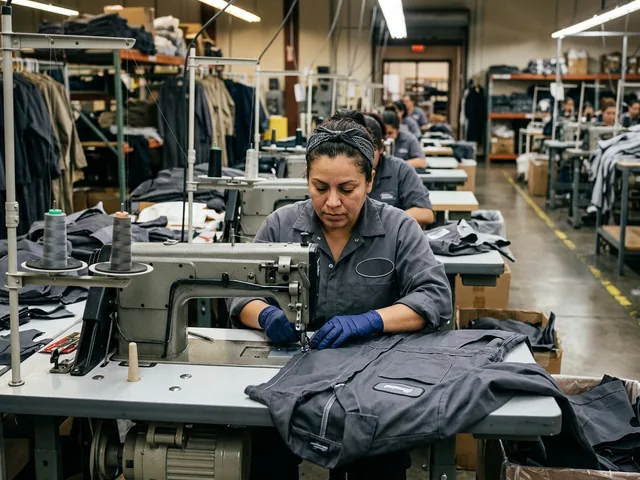
The floor, the people who sign each step, and the records kept.
Read
Every way to reach the sales team, and what each reply contains.
Read