Custom coveralls · cut for movement

Custom Coveralls Cut for Squatting, Crawling and Reaching, With Your Logo

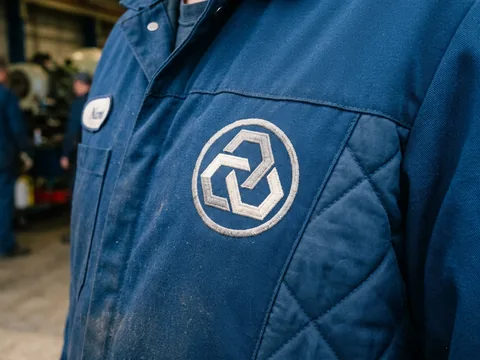
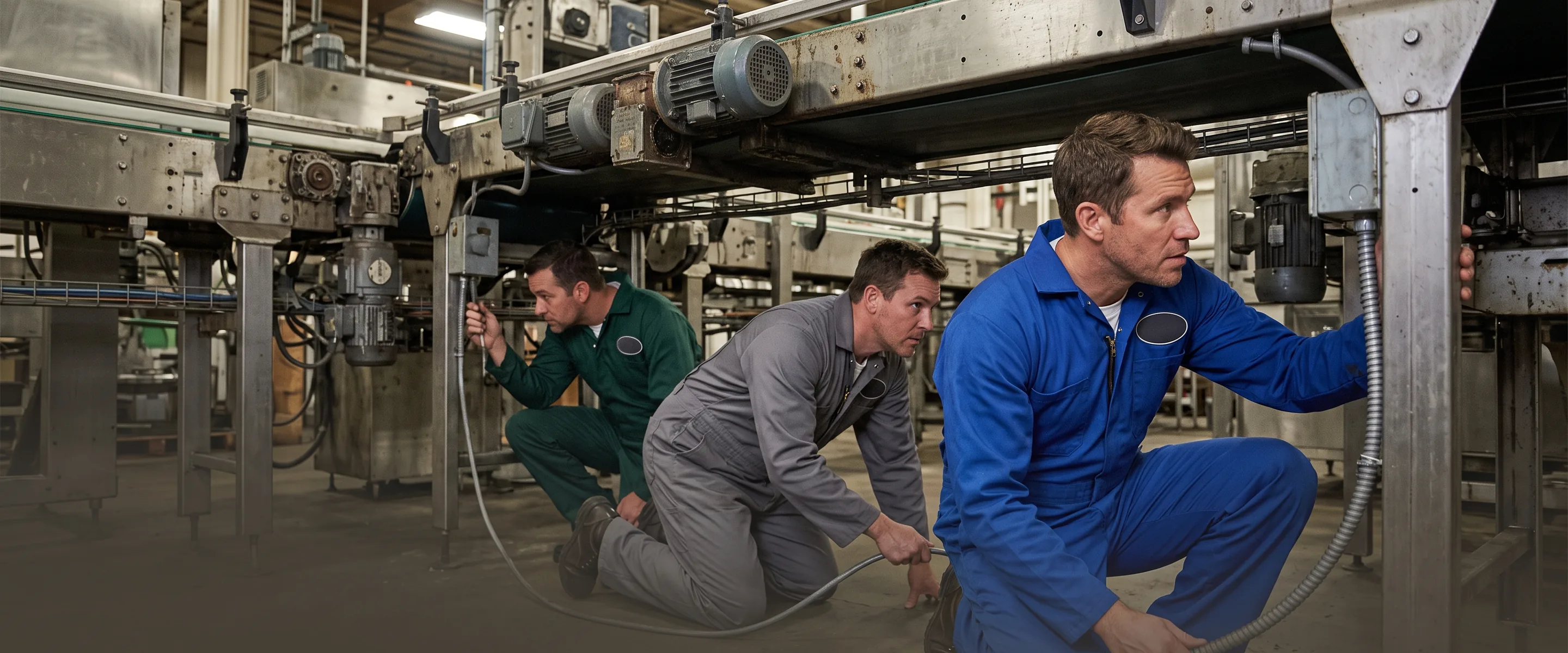
Tall maintenance worker in a royal blue long-sleeve coverall reaching both arms up to an overhead pipe, cuffs still at the wrists, embroidered chest logo and oval name patch
A coverall manufacturer that patterns, cuts, sews and embroiders long-sleeve, short-sleeve, bib and insulated coveralls in our own factory, in Regular, Tall and Long-torso fittings, for crews who kneel under machines and reach overhead all shift.
Every coverall sample goes through our movement test before it ships, with a photo of each movement.
01Range

Work Coveralls, Bib Overalls, Insulated and Hi‑Vis Coveralls

Coveralls for crews who kneel under machines, crawl into tight spaces and reach overhead, each style cut on our own CAD patterns.
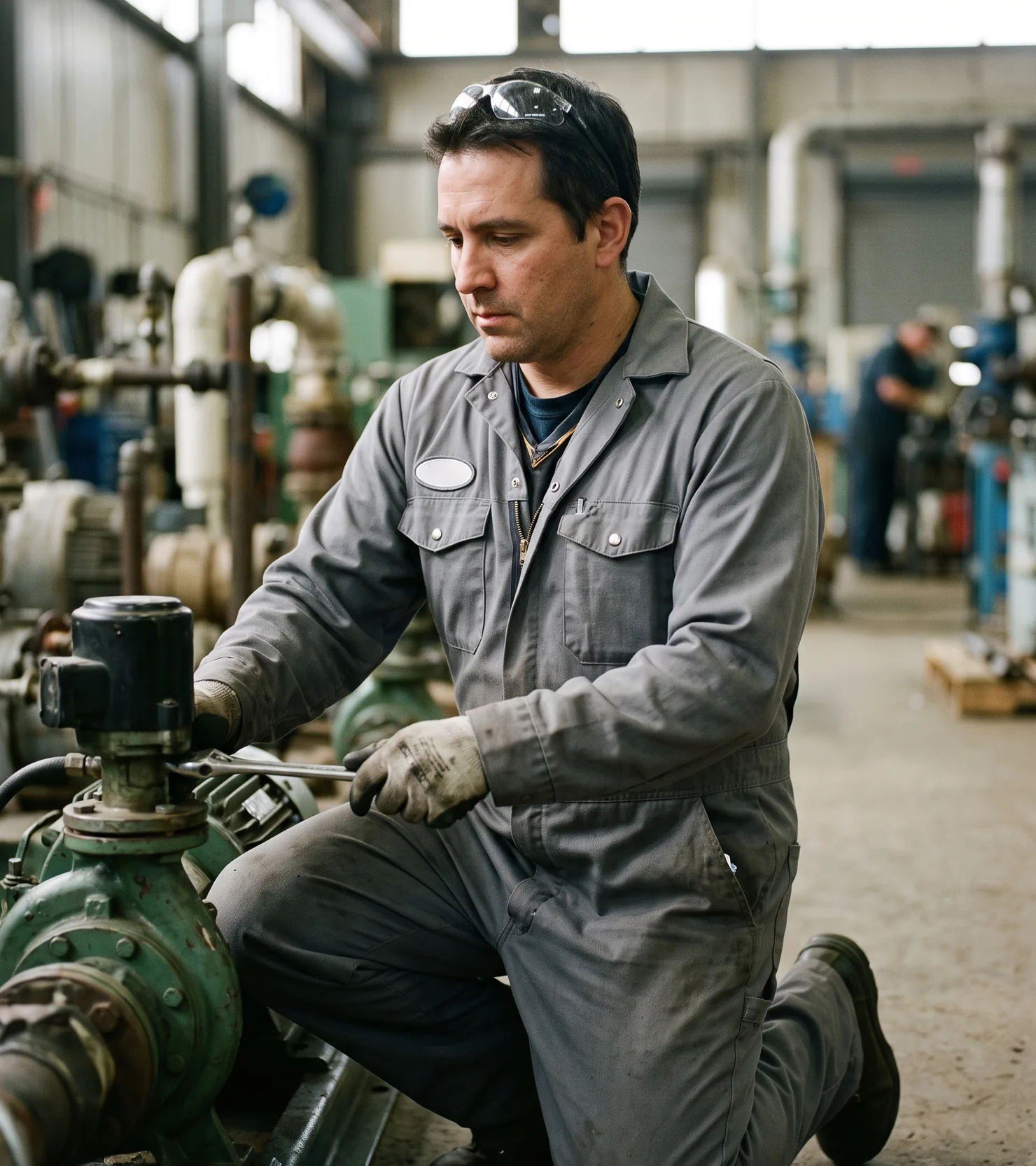
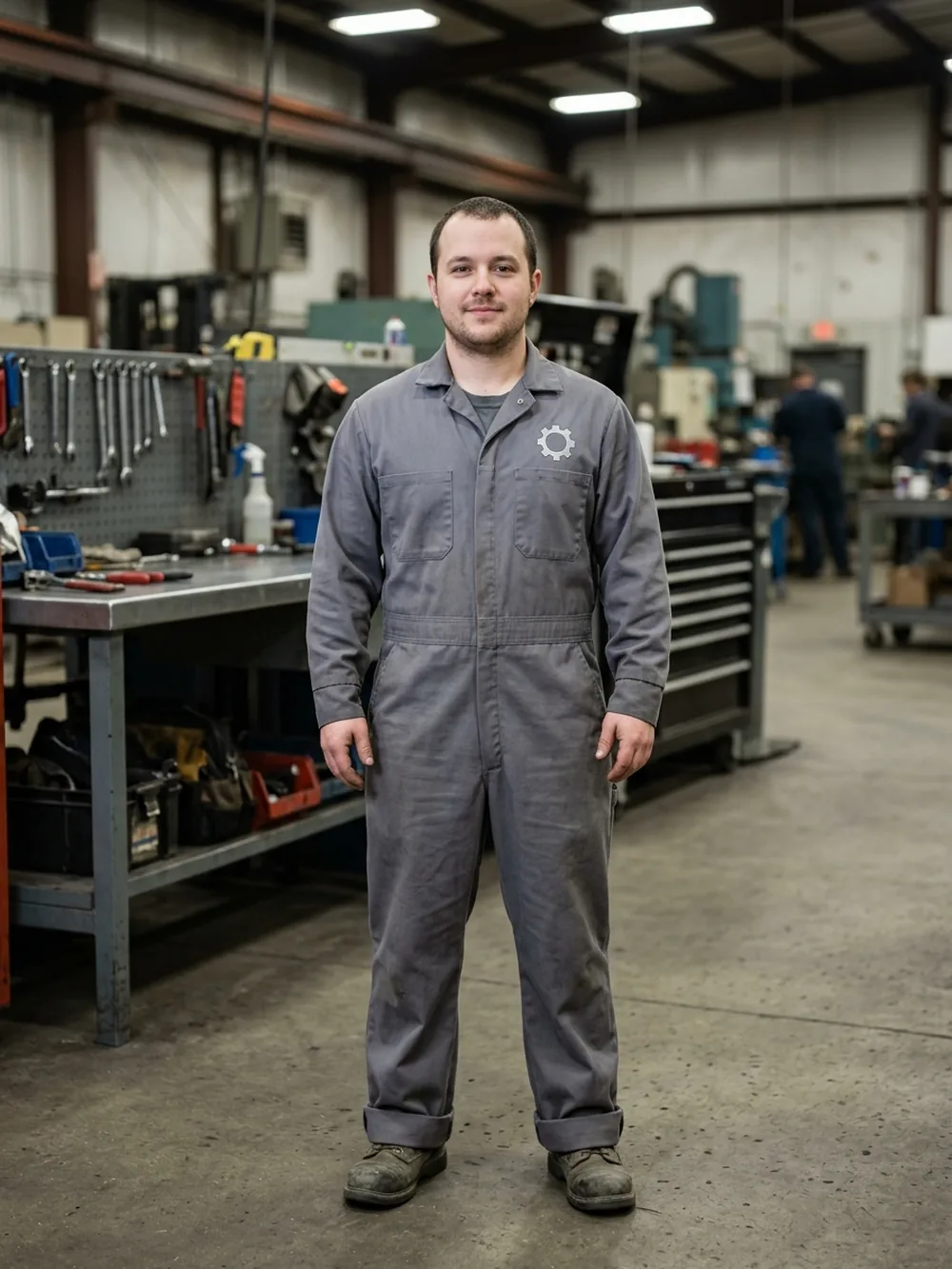
Maintenance technician in a long-sleeve coverall with a two-way zipper standing beside a production line

Long-sleeve coverall

Two-way metal zipper under a storm flap, action back, elastic back waist, side hand-through openings. Poly-cotton or cotton twill.

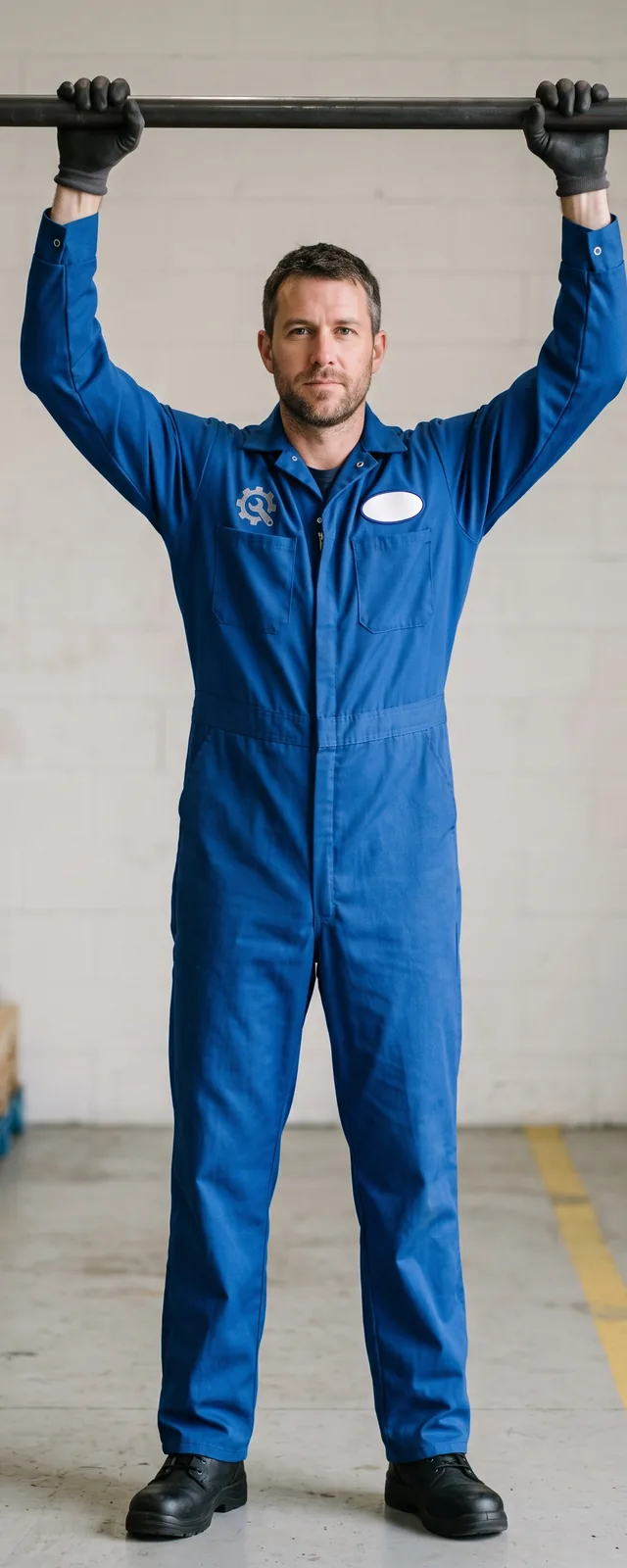
Fitter in a short-sleeve coverall working at a bench in a warm workshop

Short-sleeve coverall

The same body and back construction with short sleeves, for warm workshops and summer field work.
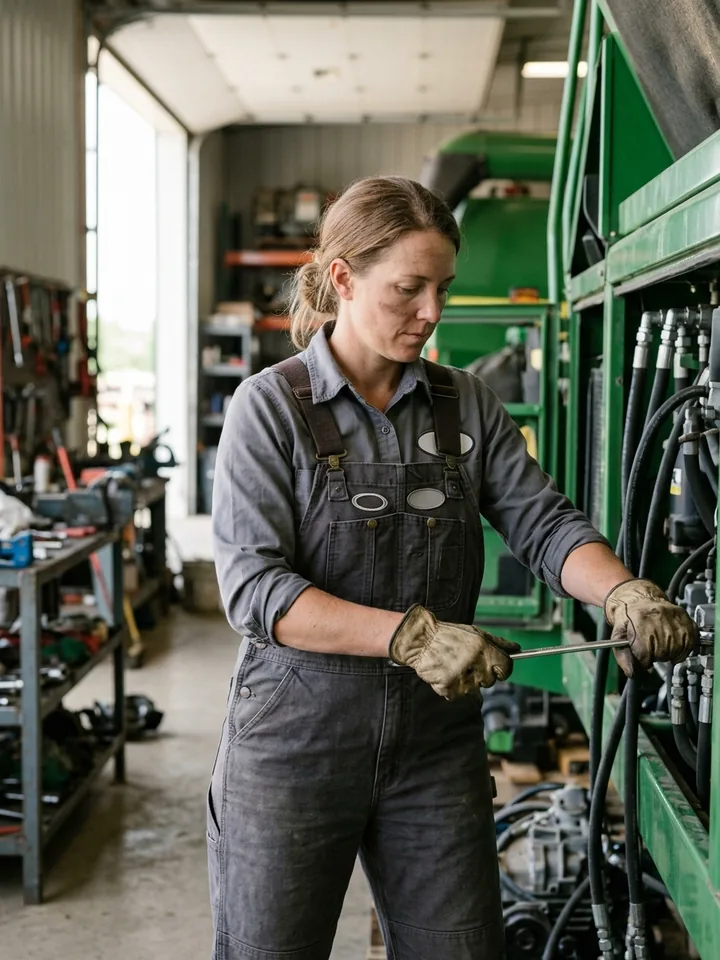
Farm equipment mechanic in bib overalls over a work shirt inside a machine shed

Bib overalls

Adjustable straps, high bib with chest pocket, side openings; knee-pad pockets optional. Worn over a shirt or under a jacket.
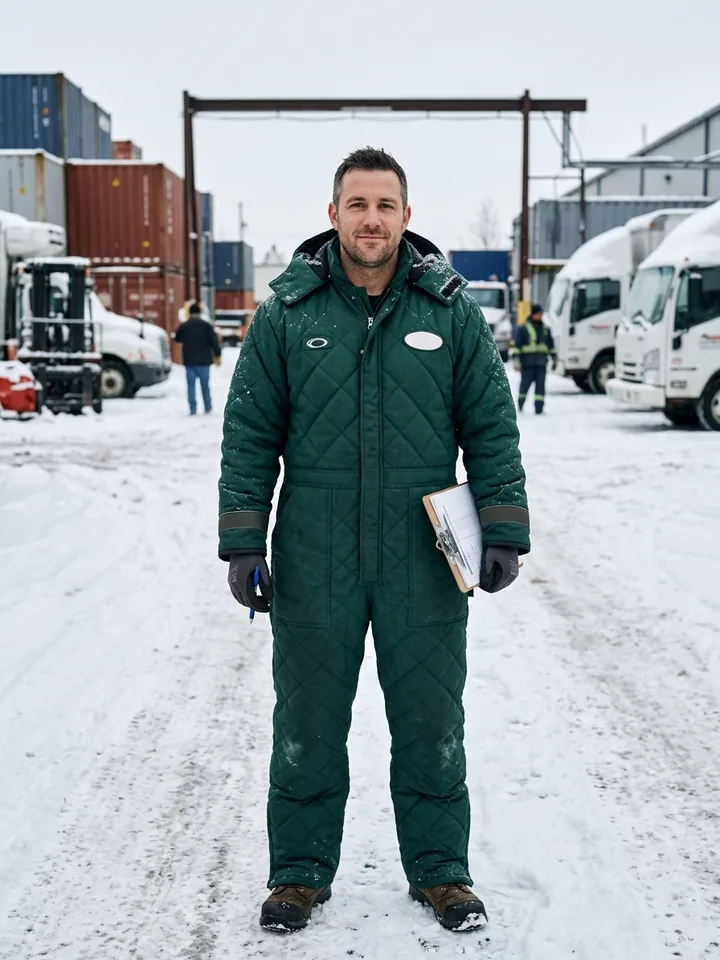
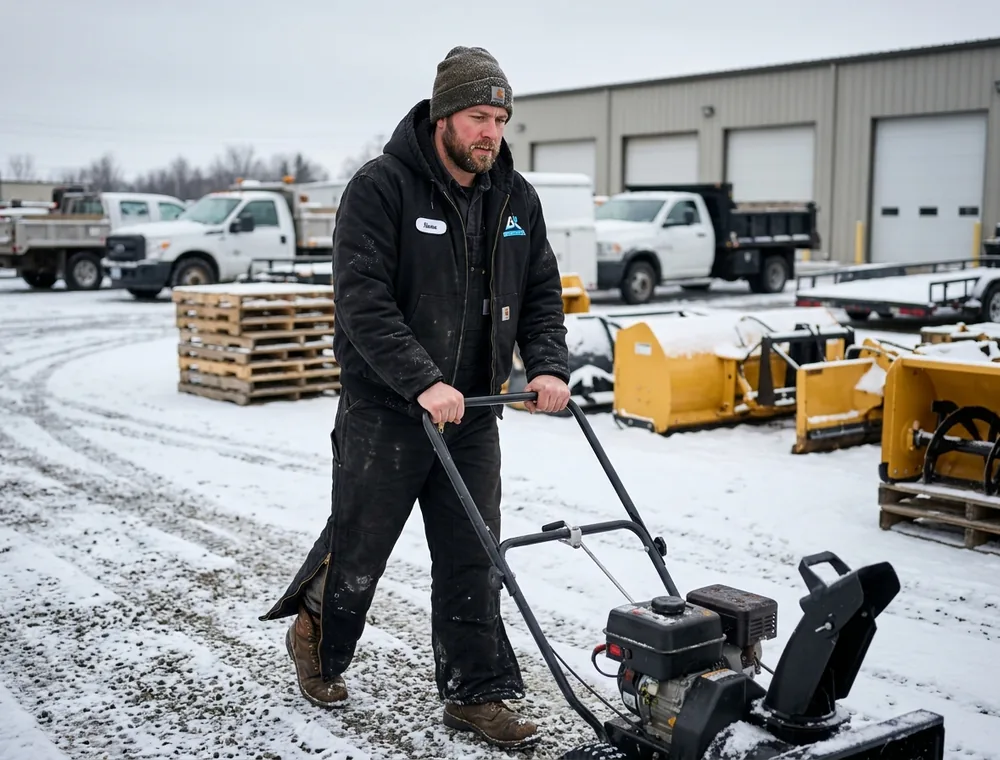
Yard technician in an insulated coverall with a detachable hood in a snowy depot

Insulated coverall

Twill or cotton duck shell, quilted lining, fill in three weights, leg zippers and a detachable hood. Built around the fill
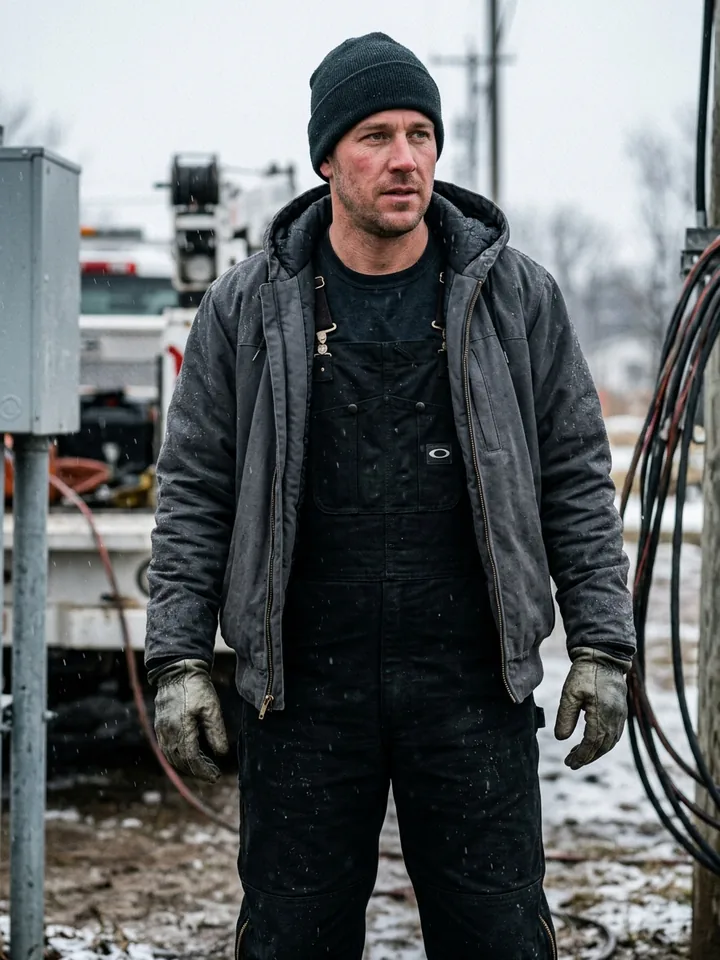
Field worker in insulated bib overalls and a work jacket in winter weather

Insulated bib overalls

The same fills and leg zippers in a bib build, worn under an insulated jacket for yard and field work.

Ramp worker in a fluorescent yellow hi-vis coverall with reflective tape on body and sleeves

Class 3 hi-vis coverall

Sleeved, fluorescent fabric with reflective tape on body and sleeves; logo area planned as on our safety vests.

Process operator in an FR coverall with a brass zipper beside plant equipment

FR coverall

Two-way brass zipper, FR fabric that carries the mill's test report and an FR trim list, made on our FR clothing program.

02Fit

Coverall Fit for Movement: Torso, Crotch, Action Back, Gussets, Sleeves

A coverall is one garment from collar to ankle, so every movement pulls on its whole length. Six areas are set on the pattern so it gives where the body moves.
01 · TORSO

Torso length

Shoulder-to-crotch length decides whether a coverall drags at the shoulders and seat in a squat. Graded in CAD for every size and changed in fixed steps by fitting.

02 · CROTCH

Crotch and diamond gusset

Shaped for squatting and kneeling, set lower than on work pants, triple-needle stitched and bartacked. An optional diamond gusset spreads a deep squat over four seams.
03 · BACK
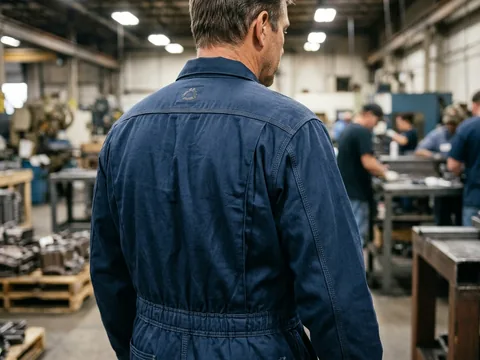
Close-up of the action back pleats and elastic back waist on a coverall

Action back

Two inverted pleats behind the shoulder blades, 6 cm of total opening. Flat at rest, open on the reach, so the front never rides up into the throat.
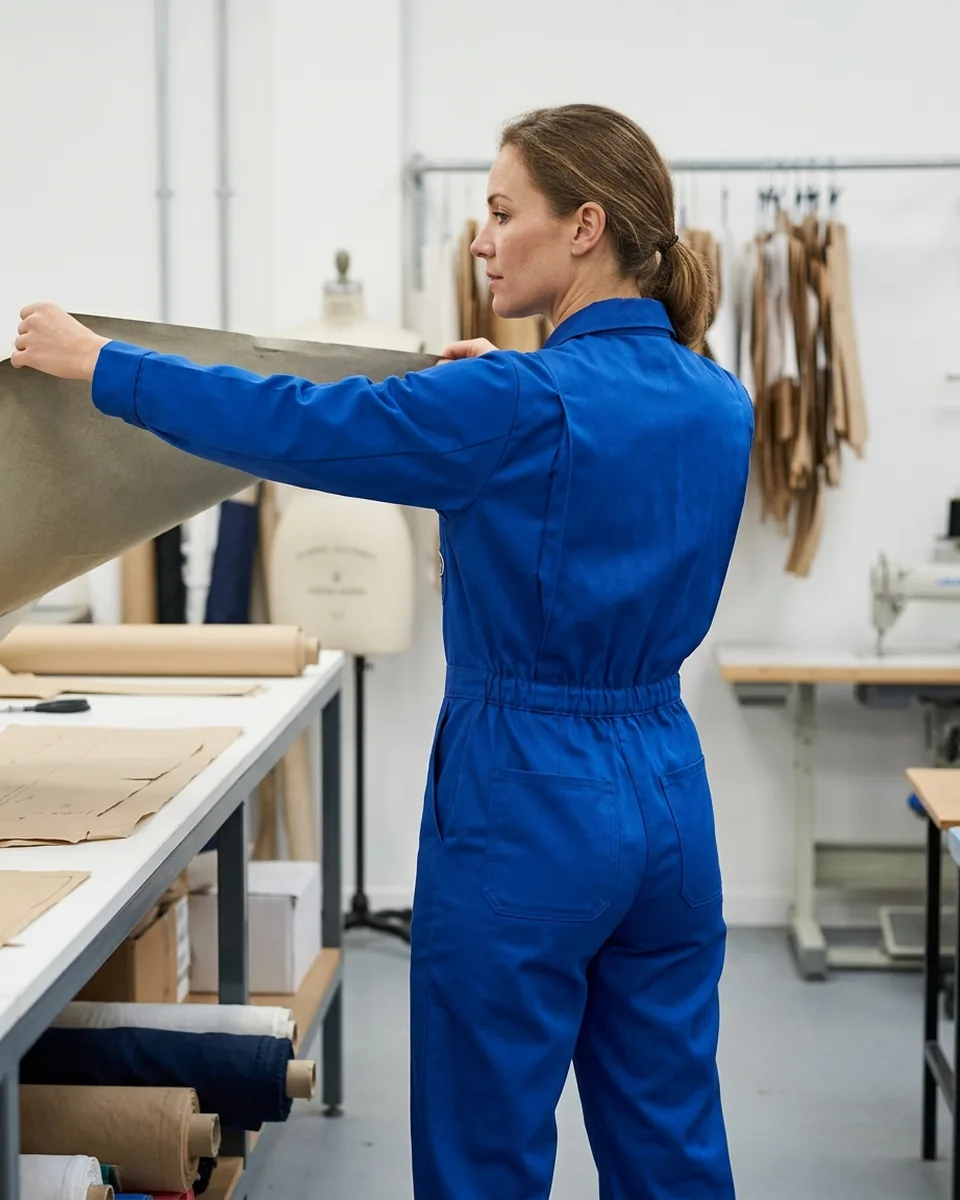
Fit model seen from behind reaching both arms forward, the two back pleats of the coverall opened and the elastic back waist holding the middle in 1 2 3 4 5 6
04 · UNDERARM

Underarm gussets

An optional diamond under each arm adds length when the arm goes up, so the side seam does not drag the body of the coverall with it.

05 · CHEST & WAIST

Chest ease and back waist

Chest set 20–25 cm over the body measurement, because a coverall goes on over clothes. The elastic back waist pulls the middle in, so the ease sits where the movement is.

06 · SLEEVES & LEGS

Sleeves and legs

Sleeve length set so the cuff still covers the wrist with both arms up, closed by snap or hook-and-loop. Inseam follows the fitting, so the hem reaches the boot when kneeling.

What you receive
Every setting written on the build spec sheet and signed with the pattern by the pattern room lead. Re-orders are cut from the same CAD pattern and marker, so the tenth delivery fits like the sample.
Crews keep the coverall zipped and on through the whole shift.
Send the coverall your crew wears now
03Crews

Coveralls for Plants, Energy, Equipment Repair and Ground Handling

Which coverall each kind of crew wears.

01

Manufacturing plants and maintenance teams

Long-sleeve poly-cotton with soil-release finish for line maintenance, millwrights and plant engineers; short-sleeve for hot production halls.

Send your crew list
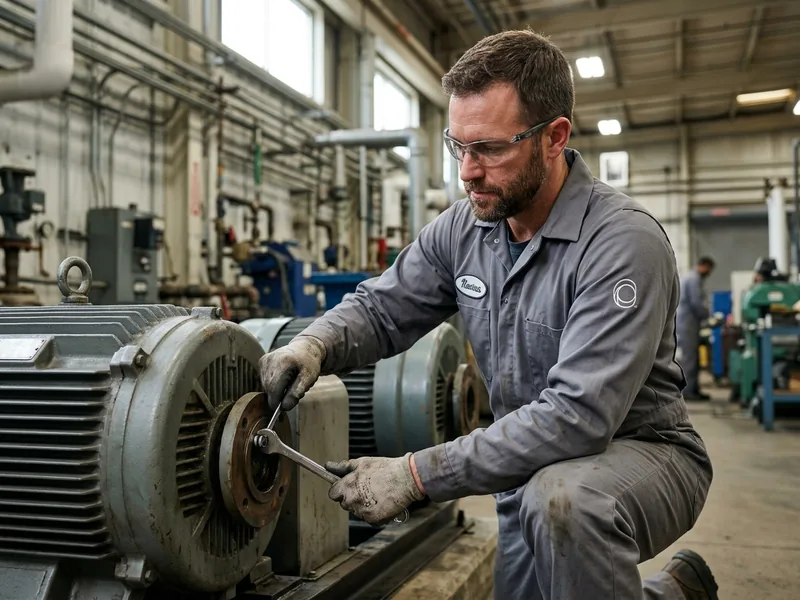
Plant maintenance worker kneeling beside a machine in a long-sleeve coverall
02

Oil, gas and utility operators

Long-sleeve and insulated coveralls for tasks where your hazard assessment does not call for FR; tasks that do go to the FR program.

Send your crew list
03

Agricultural and equipment repair

Long-sleeve coveralls, insulated coveralls and insulated bibs for dealership workshops and field service, in all three fittings.

Send your crew list
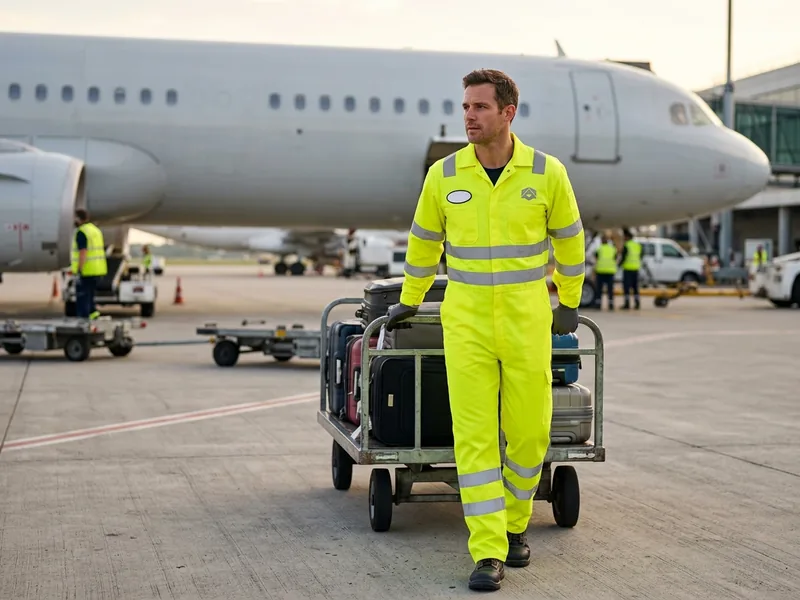
Airport ground handler in a hi-vis coverall pushing a baggage cart beside an aircraft
04

Logistics depots and airport ground handling

Long-sleeve coveralls for depot maintenance, Class 3 hi-vis for ramp and yard work, insulated coveralls for winter nights outdoors.

Send your crew list
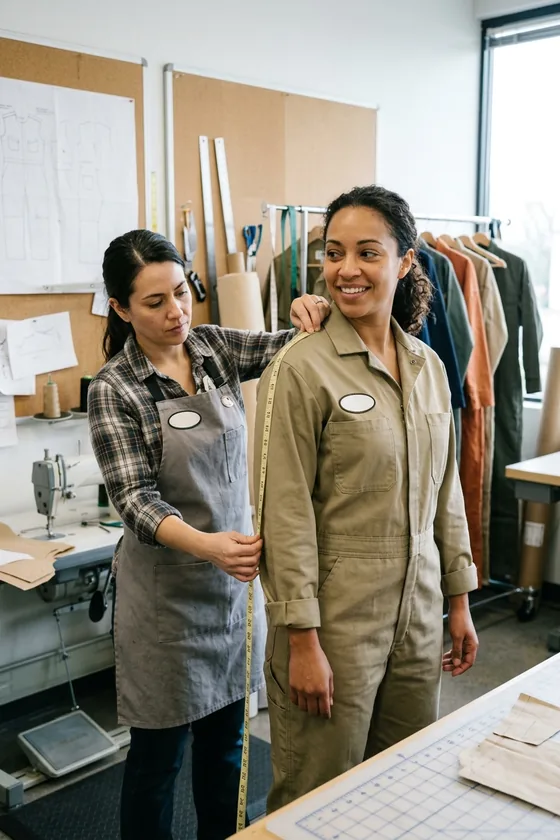
Pattern maker measuring the torso length of a fit model wearing a coverall
04Choosing

Five Choices That Set a Coverall Program

Each one is walked through with you before the sample plan is written.
  1. 01

    Fitting

    Regular, Tall or Long-torso, chosen by height and body length. Fittings
    Chosen wrongShoulders drag in a squat and cuffs ride up the forearm.
  2. 02

    Fabric weight

    Lighter twill for warm halls, heavier for outdoor and equipment work; poly-cotton or cotton. Fabrics
    Chosen wrongA sweltering workshop, or knees worn through by spring.
  3. 03

    Insulation

    Unlined, or one of three fills; many programs run both. Fill weights
    Chosen wrongOne coverall asked to cover every month of the year.
  4. 04

    Openings

    Zipper front, side openings and cuffs; leg zippers and hood on insulated builds. Construction
    Chosen wrongAn insulated coverall that will not go on over boots.
  5. 05

    Logo method

    Matched to your wash route. Logos
    Chosen wrongA logo that fades before the coverall does.
All five land on the build spec sheet you sign with the sample.
Send your five answers, or leave them open
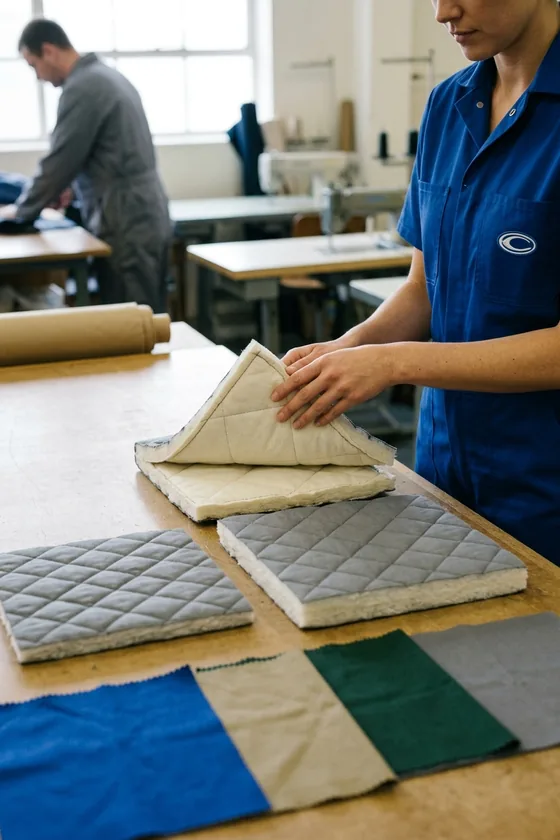
Fabric swatches and three quilted fill samples of different thickness laid out on a table
05Movement test

Movement Test on Every Coverall Sample: Squat, Crawl, Reach, Climb

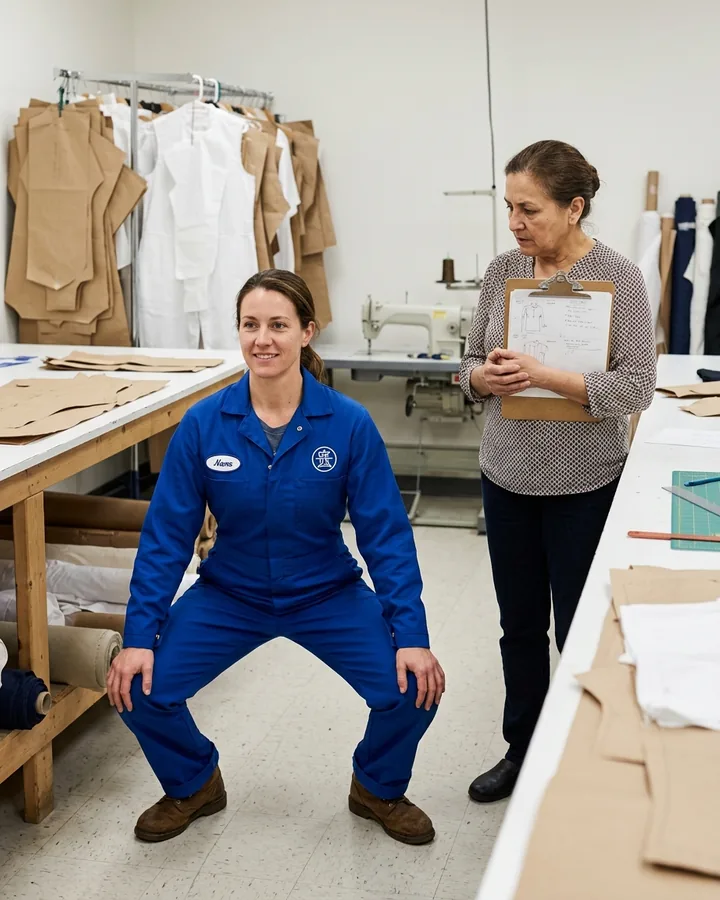
Our in-house movement test is our own method. A fit model wears the sample over work clothes and boots, in the base size and the largest size on your order, where grading errors show first. The pattern room lead watches and signs. Inside the pattern room
Fit model doing a full squat in a coverall while the pattern room lead watches with a clipboard
Example of the failure route
  1. × 10
    Full squat × 10
    Zipper stays flat; no strain on the crotch seam.
  2. Kneeling crawl 5 m
    No pull across the back on the crawl.
  3. Both arms overhead
    Cuff rises no more than 5 cm from the wrist.Over the limit: sleeve set longer on the pattern.
  4. Both arms forward
    Back waist stays on the body as they bend.
  5. Ladder, 3 rungs
    Crotch seam and back hold on a high step.
Fit-test sheet · style CV-LS-01Example sheet
MovementCheckedBase sizeLargest size
SquatZipper, crotch seamPASSPASS
CrawlBack, crotch seamPASSPASS
OverheadCuff at the wristPASSPASS
  1. Pattern changed where it failed
  2. Re-sewn; all five movements run again
  3. Passes in both sizes, then the sample ships
ReachBack waistPASSPASS
ClimbCrotch seam, backPASSPASS
Signed: pattern room leadPhoto of each movement attached · travels with your sample
When a coverall fails
The pattern is changed where it failed: torso length, crotch curve, pleat depth or sleeve length. It is re-sewn, all five movements run again, and it ships only after both sizes pass.
What you receive
A photo of each movement in each size, each result and the signature, travelling with the sample so your team can repeat the moves.
On programs of 200+ people
A full size set goes out for a wear trial with the same sheet. Site supervisors run the five moves on real crew members and mark each size and fitting; changes go into the pattern before bulk.
Ask for the fit-test sheet with your sample plan
06Sizing

Regular, Tall and Long‑Torso Fittings, XS–5XL

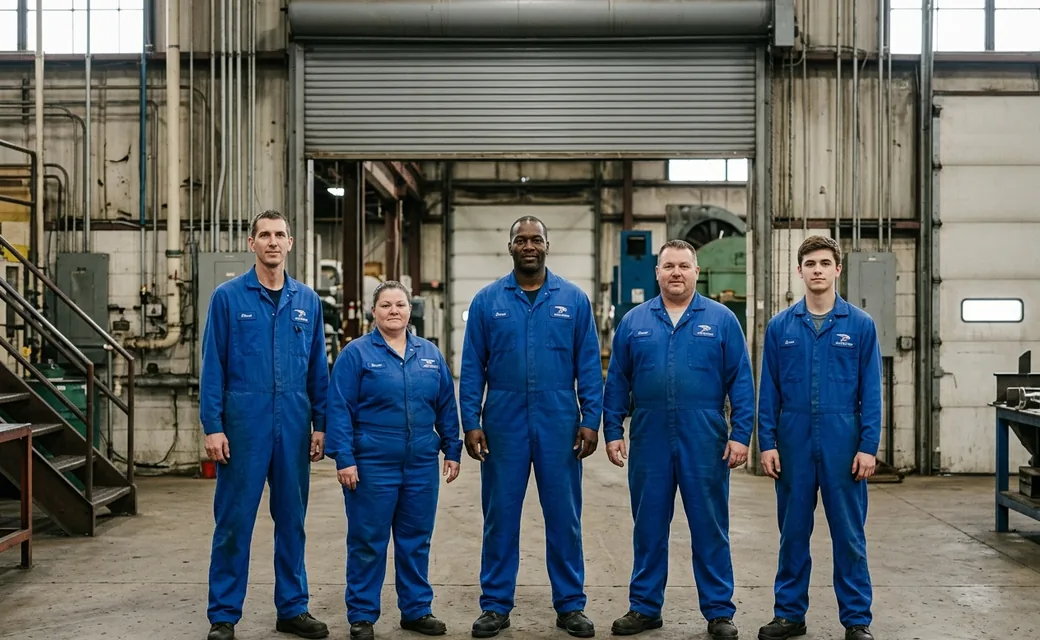
Size is chosen by chest, fitting by height and body length. Sizes run XS–5XL in men's and women's cuts on core styles, and each person gets one size and one fitting.
Five crew members of very different heights standing side by side in the same royal blue coverall
R

Regular

For people up to 180 cm / 5'11". The base pattern: every size is graded on it first.

T

Tall

For people from 180 to 193 cm / 5'11"–6'4": torso +5 cm, inseam +5 cm, sleeve +4 cm.

LT

Long-torso

Torso +5 cm only, for people whose legs fit Regular but whose body is longer, so the coverall stops pulling at the shoulders when they squat. Same chest size. Made on custom programs.
Grading
Each coverall is graded through every size in CAD, then the Tall and Long-torso steps are added. The chest logo moves down with the longer torso. Logo position
Your staff list
Our Excel size template carries a fitting column, and every row is checked for a missing fitting before the list closes. Rollouts across many sites: corporate uniforms.
Packing
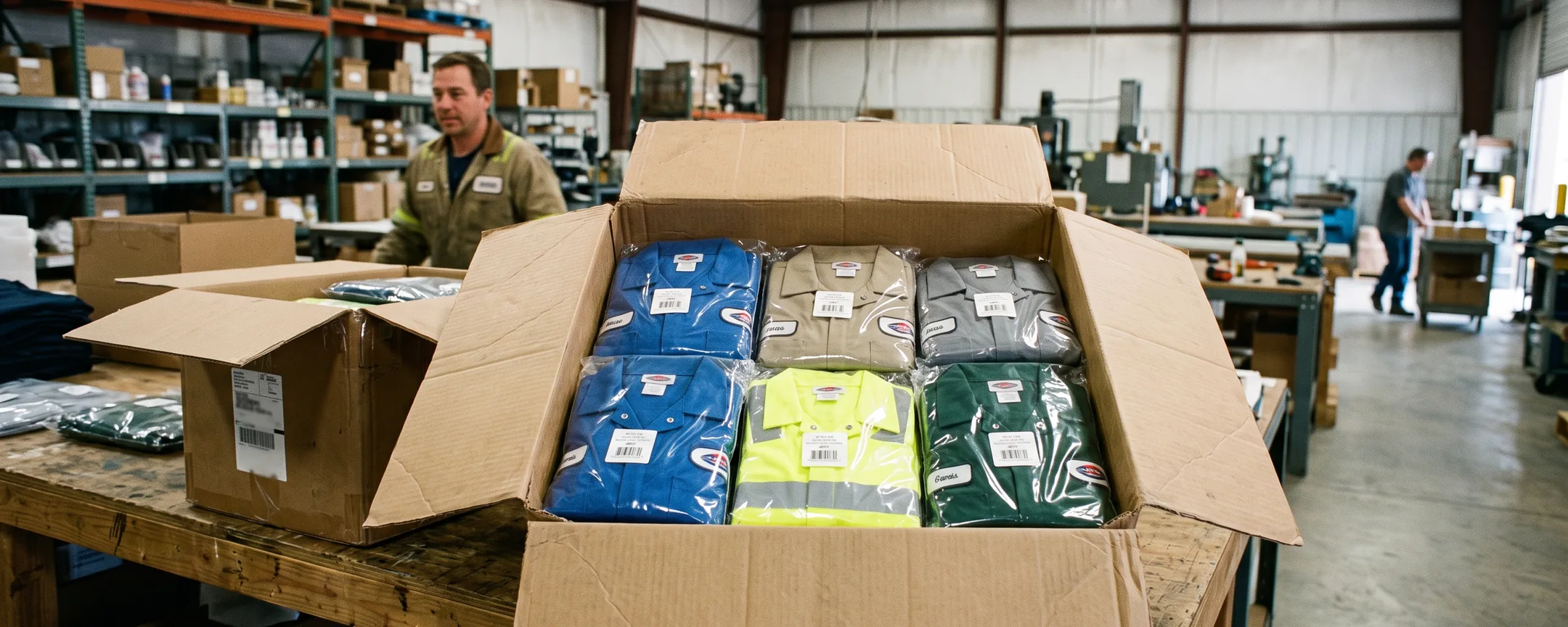
Each coverall goes in its own polybag with a size and fitting sticker, R, T or LT. Cartons are packed by size or by person, with name, size, fitting and site on the carton.
New starters
Rows are collected monthly, cut from the same pattern in the same fitting and shipped within the re-order lead time.
Zipped from the first job to the last, on every crew member's own size and fitting.
Maintenance worker in insulated bib overalls and an insulated jacket in a winter yard, leg zippers open over work boots
Cross-section · three layers
Shell + logoFillLining
Fill weight is stated on the spec and the quote; your safety team chooses it for your own working conditions.
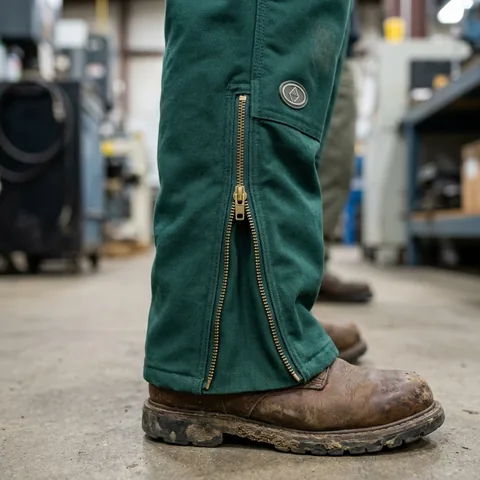
Leg zipper of an insulated coverall opened from ankle to knee over a work boot

Leg zippers run ankle to knee, 30 cm, or full length, so the coverall goes on over work boots.

You receiveA spec naming shell, fill, lining, zipper lengths, hood and logo positions, plus the fit-test sheet in the tested fill.
Tell us the fills you run
07Insulated

Insulated Coveralls and Bib Overalls Built Around the Fill

Built for winter shifts in yards, unheated workshops and field service, as a three-layer garment with the pattern set for the bulk.
  1. 01

    Shell and fill

    Twill or cotton duck shell over polyester fill in 120, 160 or 200 gsm. Many programs run two fills in one style and colour.

  2. 02

    Quilted lining

    The fill is quilted to a polyester taffeta lining before assembly, so it stays spread and does not slump into the hem after washing.

  3. 03

    Fit with the fill in place

    Chest ease goes up a further 5 cm; the action back and gusset stay. The five movements run with the fill in, and the sheet records the fill weight. Movement test

  4. 04

    Leg zippers and hood

    Zippers at the legs for boots, and a hood that detaches from the collar on a zipper or snaps.

  5. 05

    Logos before the lining

    Logo and name are embroidered on the shell panel before it meets the lining, so stitches never pass through the fill or show inside.

  6. 06

    Wash route

    A domestic or commercial wash route, never industrial laundering; the logo is wash-tested on that route. Logo testing
Worker kneeling beside equipment with the two-way coverall zipper opened from the bottom, chest pockets and side opening visible
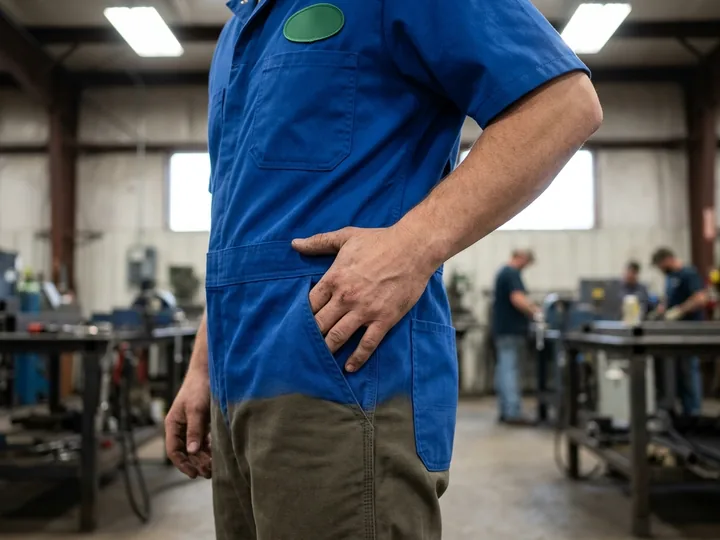
Hand reaching through the side opening of a coverall into the trouser pocket underneath
Double-layer knee with a knee-pad pocket opening on a coverall leg
08Construction

Two-Way Zipper, Side Openings, Cuffs, Pockets and Seams

Front closure

Two-way metal zipper under a storm flap: open from the bottom to kneel, closed at the neck in wind. Concealed zipper for work against finished surfaces.

Side openings

Hand-through at both hips to reach the pockets of the trousers underneath, closed by snap or behind a pocket.

Cuffs and collar

Snap or hook-and-loop cuffs and a lay-down collar; a detachable hood on insulated builds.

Pockets

Flapped chest pockets, sleeve pen pocket, hip and back pockets. Every mouth is bartacked; the logo zone stays clear of flaps.

Seams and knees

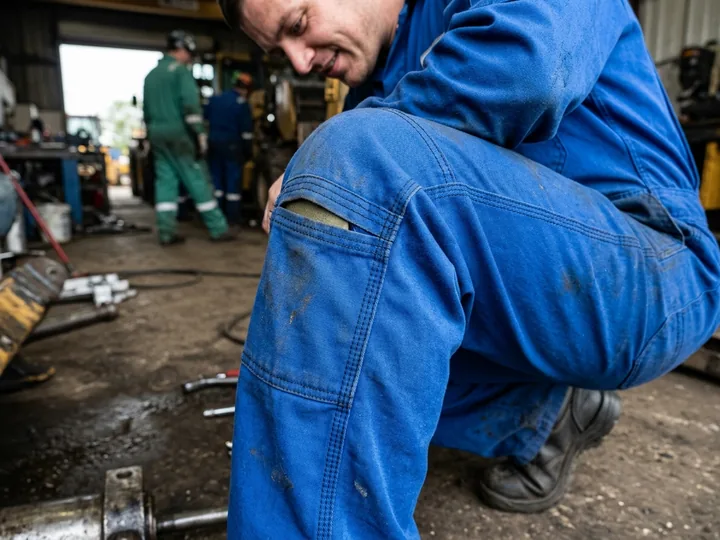
Triple-needle main seams, bartacks at pocket mouths and the crotch. Double-layer knees with knee-pad pockets are optional, built as on our mechanic uniforms.

Leg openings

Straight hems on unlined coveralls; leg zippers on insulated builds.
The pattern room lead signs these details on the pattern; line QC checks zipper, openings and pocket placement on the first piece of each line.
Short technician in a coverall, front view, with the chest logo above the left chest pocket Very tall technician in the same coverall, front view, the chest logo in the same visual place
Same visual place on every size and fitting
09Logos

Coveralls With Logo: Chest, Back and Name Patches

Chest
Embroidered, up to 4 in / 10 cm wide, set per size and per fitting; on Tall and Long-torso it moves down with the longer torso.
Back
Screen printed, heat-applied or embroidered, up to 12 in / 30 cm.
Names
Embroidered direct, or on a sewn oval patch of about 3.5 × 2 in / 9 × 5 cm that is replaced when a coverall is re-issued.
Tested
Digitizing, backing, density, ink and press settings are recorded per logo and reused on re-orders. Every new logo and fabric is wash-tested on the sample pieces: ISO 15797 × 50 cycles for industrially laundered coveralls, ISO 6330 × 50 for insulated. How logos are set up
Embroidered logo on the shell panel of an insulated coverall
On Class 3 hi-vis coveralls, logos never cover reflective tape and the logo area is checked from the smallest size up, as on our safety vests.
Send your logo file
10Specifications

Coverall Specifications: Fabrics, Finish, Closures and Seams

The reference sheet: what is fixed on every coverall, and where each setting is explained.
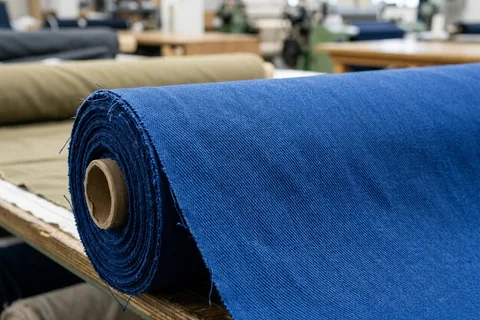
65/35 poly-cotton twill coverall fabric on the roll
65/35 poly-cotton twill
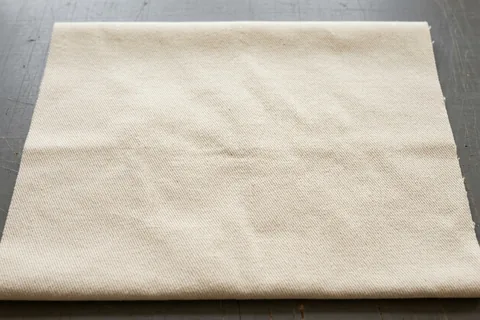
100% cotton twill coverall fabric laid flat
100% cotton twill
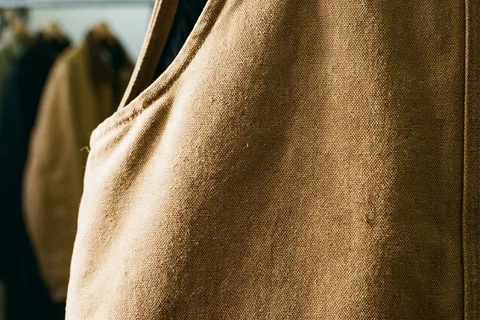
Cotton duck shell fabric for insulated coveralls
Cotton duck shell

Fabric

Standard
65/35 poly-cotton twill, 200–260 gsm: holds its shape through industrial laundering and dries fast.
Cotton
100% cotton twill, 260–300 gsm, for cotton next to the body and heavier outdoor work.
Insulated shell
Poly-cotton twill 240–280 gsm, or cotton duck 340–400 gsm where the shell takes abrasion.
Lining and fill
Insulated builds

Finish and colour

Soil-release
Optional on poly-cotton, graded to : 3.5 or better new, 3.0 or better after 25 industrial washes.
Water-repellent
Optional on insulated shells.
Colour
Any colour lab-dipped to your Pantone; re-orders checked against the retained dip before cutting. Dark shades and two-tone builds for oil-contact work.
Fabric documents
OEKO-TEX Standard 100 fabrics available; dimensional change 3% or less after laundering, ISO 5077.

Fit and sizes

Sizes and fittings
Regular, Tall, Long-torso
Movement settings
Chest ease, and : fit
Finished-measurement tolerance
Four measured points

Build

Closures
Two-way metal zipper under a , or concealed; snap or hook-and-loop cuffs.
Seams and knees
Triple-needle main seams; double-layer knees optional. Construction
An oily-stain release test: a stain is applied, the fabric is washed, and the remaining mark is graded on a 1–5 scale.
Two inverted pleats behind the shoulder blades that open when the arms reach forward.
A diamond-shaped panel sewn where the crotch seams meet, spreading the strain of a squat over four seams.
The fabric flap that covers the front zipper against wind and snagging.
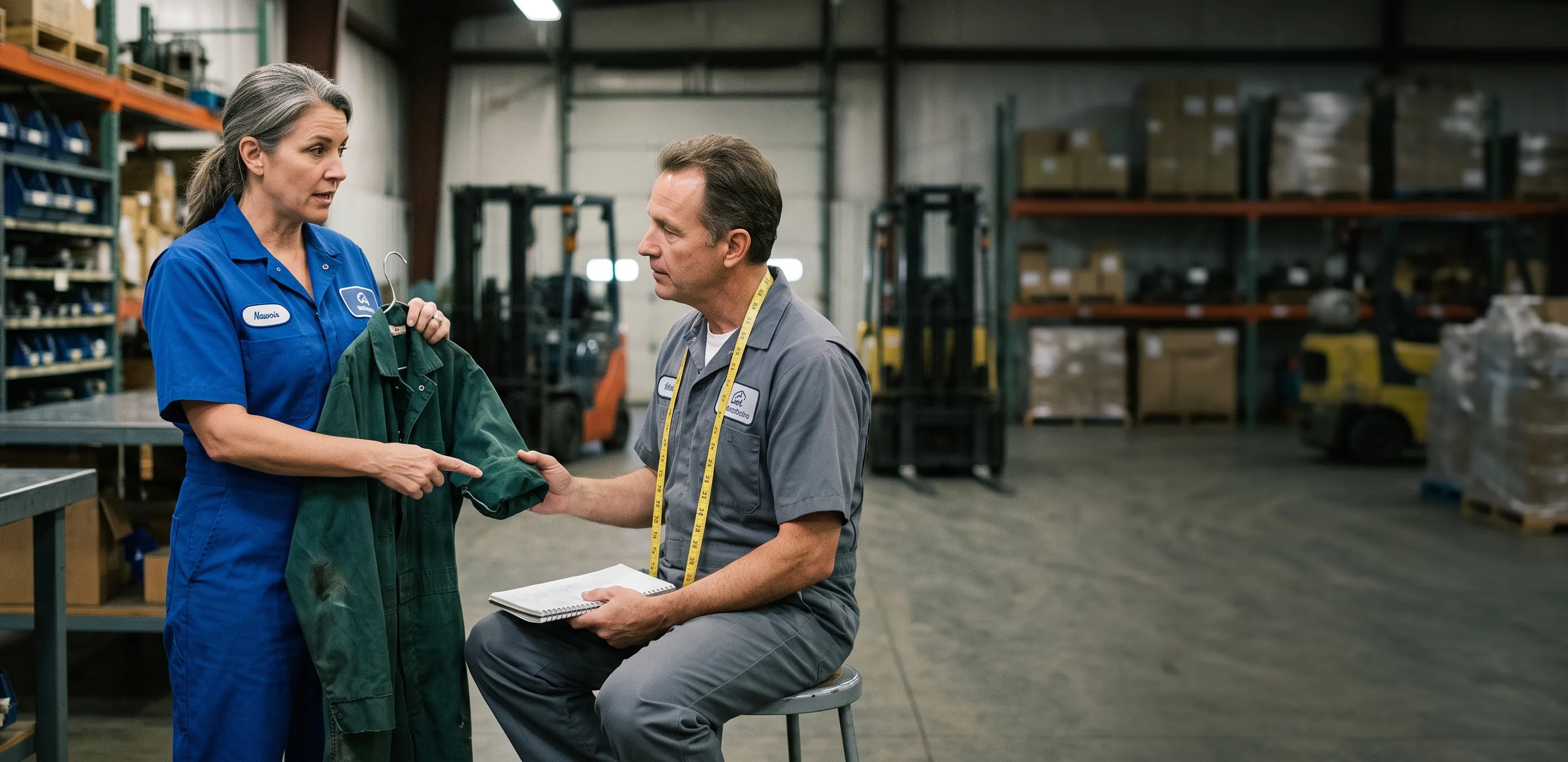
Site supervisor showing a pattern maker the worn, short cuffs of an old coverall
Next step

Send Your Crew's Height Range and the Coverall They Wear Now

The shortest and tallest people on the crew, today's coverall and your logo. The reply carries a quote, a sample plan and a proposed split of Regular, Tall and Long-torso.

Send Your Height Range
11Compare

Coverall, Two-Piece, Bib, FR or Hi-Vis: Choosing the Build

Choose by the work first, then by the fit work each build needs.
Build
Chosen for
Fit work in it
Made on
Long- or short-sleeve coverall
Full-body cover over own clothes, with no gap at the waist when bending or crawling
Torso length per fitting, action back, crotch gusset, sleeve set for overhead reach
This page
Work pants with a jacket or shirt
Crews who take the top layer off during the shift, or need a separate hi-vis or FR top
Inseam and rise on the pants, sleeve and back on the top
Pants & jackets programs
Bib overalls
Full leg cover with a free upper body, over a shirt or under a jacket
Bib height and strap length, crotch gusset
This page
Insulated coverall or bib
Cold workshops, yards and field service
Extra chest ease for the fill, leg zippers for boots
This page
Class 3 hi-vis coverall
Ramp, yard and roadside work near vehicles
Tape layout that stays visible when squatting and reaching
FR coverall
Flash fire or arc flash named in your hazard assessment
The same fit work on FR fabric, with an FR trim list
Mechanic coverall
Oil, grease and solvent contact, paint-safe fronts
The same fit work with soil-release finish and fluid-tested logos
12Inspection

Coverall Inspection: Signed Pattern, First Piece, Four Measured Points

  1. 01

    At sample stage

    Pattern and movement test are signed. Your approved sample becomes the standard the QC manager checks every later piece against.

  2. 02

    First piece on each line

    Line QC checks zipper, pleat depth, gussets, pockets, knees and logo against the approved sample before the run continues.

  3. 03

    Inline

    Checks at 3 points during sewing, including the crotch-join and pocket-mouth bartacks.

  4. 04

    Final

    AQL 2.5, General Level II: four measurements on every sampled coverall, plus size and fitting labels, zipper and logo position. The QC manager releases against the report.
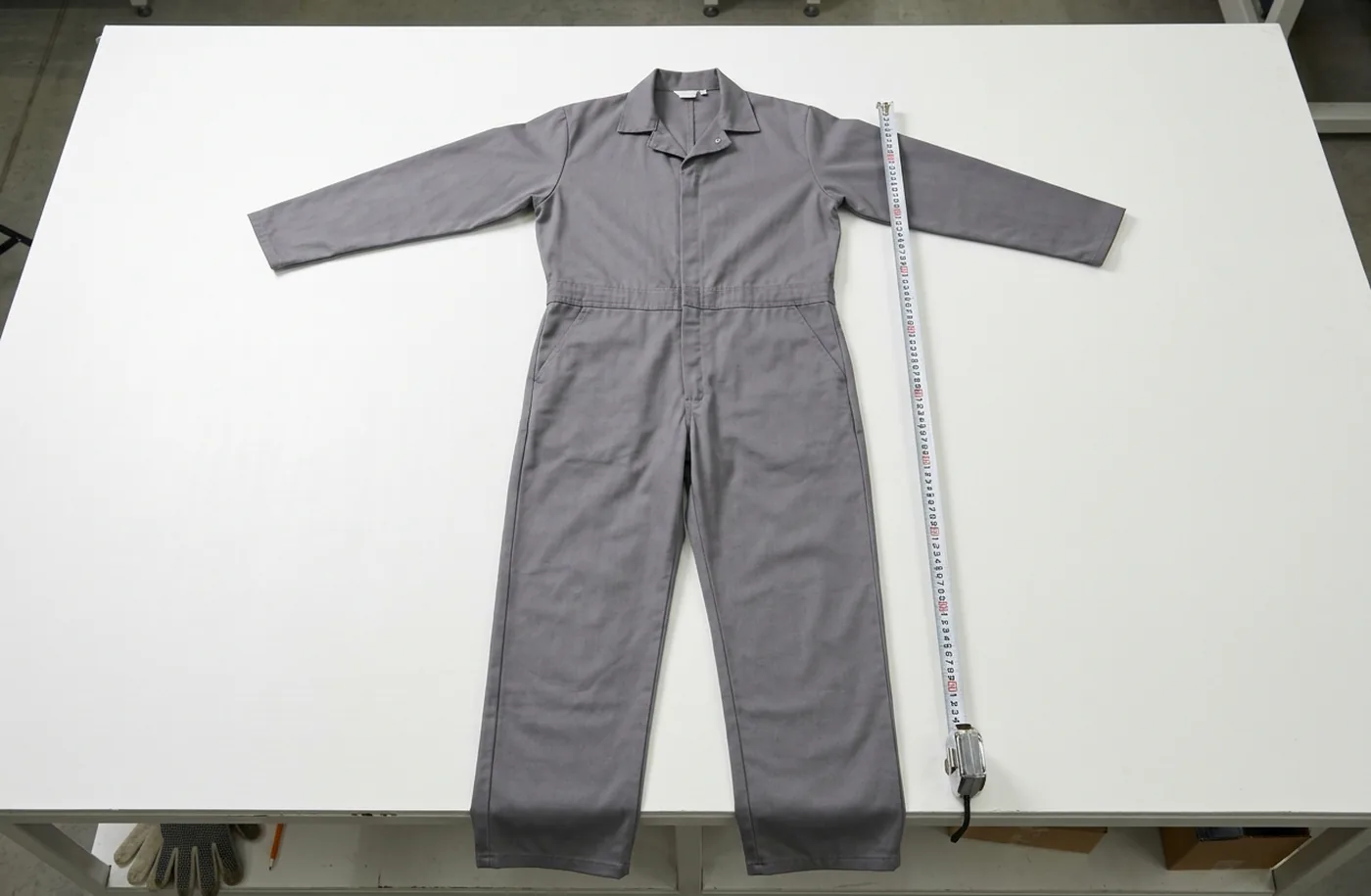
Coverall laid flat on an inspection table with a measuring tape beside it Torso ±1 cm Inseam ±1 cm Sleeve ±1 cm Chest ±1.5 cm
A measurement outside tolerance, or a wrong fitting label, counts as a defect.

Your file

  • Build spec sheet per style
  • Fit-test sheet with photos
  • Logo wash test record
  • Final AQL report
  • Carton list: PO, style, colour, dye lot
  • Per-person name, size, fitting and site
When something is outA stopped line reaches the QC manager in the same shift. If spec or ship date is affected, your account manager tells you within 24 hours. For a delivered batch, the terms on our home page apply.
Line QC comparing the first coverall off a sewing line with the approved sample
13Supply

Stock, Custom or Private-Label Coveralls, With Lead Times

Three ways in, with the same fit work behind each one.

Stock coveralls with your logo

Long-sleeve, short-sleeve and insulated coveralls in Regular and Tall, with your logo and names added in our factory.

Start this route

Custom coveralls

Your fabric, colour, fitting split including Long-torso, fill, openings and pockets, built from our CAD pattern or your tech pack, with a movement-tested sample.

Start this route
Coveralls packed in individual polybags in a carton, each bag with a small size and fitting sticker

What you can change

  • Fitting split
  • Colour
  • Fabric and finish
  • Fill weight
  • Gussets
  • Openings
  • Pockets and knees
  • Decoration
  • Labels

Any change after sample approval opens a new version of the spec, which you re-sign; the sample clock restarts if the approved sample changes.
5–7days · logo-on-stock sample
12–15days · custom sample or size set, movement-tested
25–35days · bulk after sample approval
37–50days · custom program, quote approval to ex-factory
15–20days · re-orders and new starters
Shipping by sea, air or express; how lead times run.
14Program model

Program Model: Equipment Dealer Group, 32 Dealerships

Who
A group selling and servicing agricultural and construction equipment in North America.
What they wear
Long-sleeve coveralls in the workshop; insulated coveralls and bibs for field service and winter yards, in the group colour with chest logo and name patch.
How the fit was set
Short to very tall, with many long-bodied technicians, so all three fittings. Supervisors ran the movement sheet on a size set and marked each size and fitting.
What we hold
Patterns and markers per fitting, signed specs, fit-test sheets, logo set-ups, the retained dip for the group colour and the current staff list.
32Dealerships, packed per dealership
~850Service technicians
Twice a yearRe-orders: unlined before spring, insulated before autumn
15Checklist

Coverall Quote Checklist: What to Send

Copy this list into your email.
  1. Garment and crew

  2. 01Styles: long-sleeve, short-sleeve, bib, insulated, hi-vis
  3. 02Crew size and height range, with any long-bodied wearers
  4. 03Fitting split, if known
  5. 04Approximate size breakdown
  6. 05Fabric and colour: Pantone, or a garment to match
  7. 06Finish: soil-release, water-repellent or none
  1. Build, logo and delivery

  2. 07Insulation: unlined, or the fill weight
  3. 08Openings and pockets: concealed zipper, leg zippers, hood, knee-pad pockets
  4. 09Logo and names: file or photo; chest, back, name patch
  5. 10Wash route: industrial laundering, or domestic and commercial
  6. 11Packing: by size or by person, and delivery sites
  7. 12A coverall your crew wears now, posted or photographed
Or use the form
Your program

Start Your Coverall Program

Send your crew's height range, the coverall they wear now and your logo.
Within 1 business day:
  • A written quote
  • A sample plan
  • A Regular / Tall / Long-torso split
Your sample arrives with its movement-test sheet and photos.
Or post one coverall your crew wears now, and the quote is built from the garment. Other ways to reach us
Please enter your name.
Please enter your company.
Please enter a valid email.
Please give a rough headcount.
Styles
Insulation
Wash route
Photos of the coverall your crew wears now: email them to [email protected].